Google Cloud AI Agent Technical Guide
Table of Contents
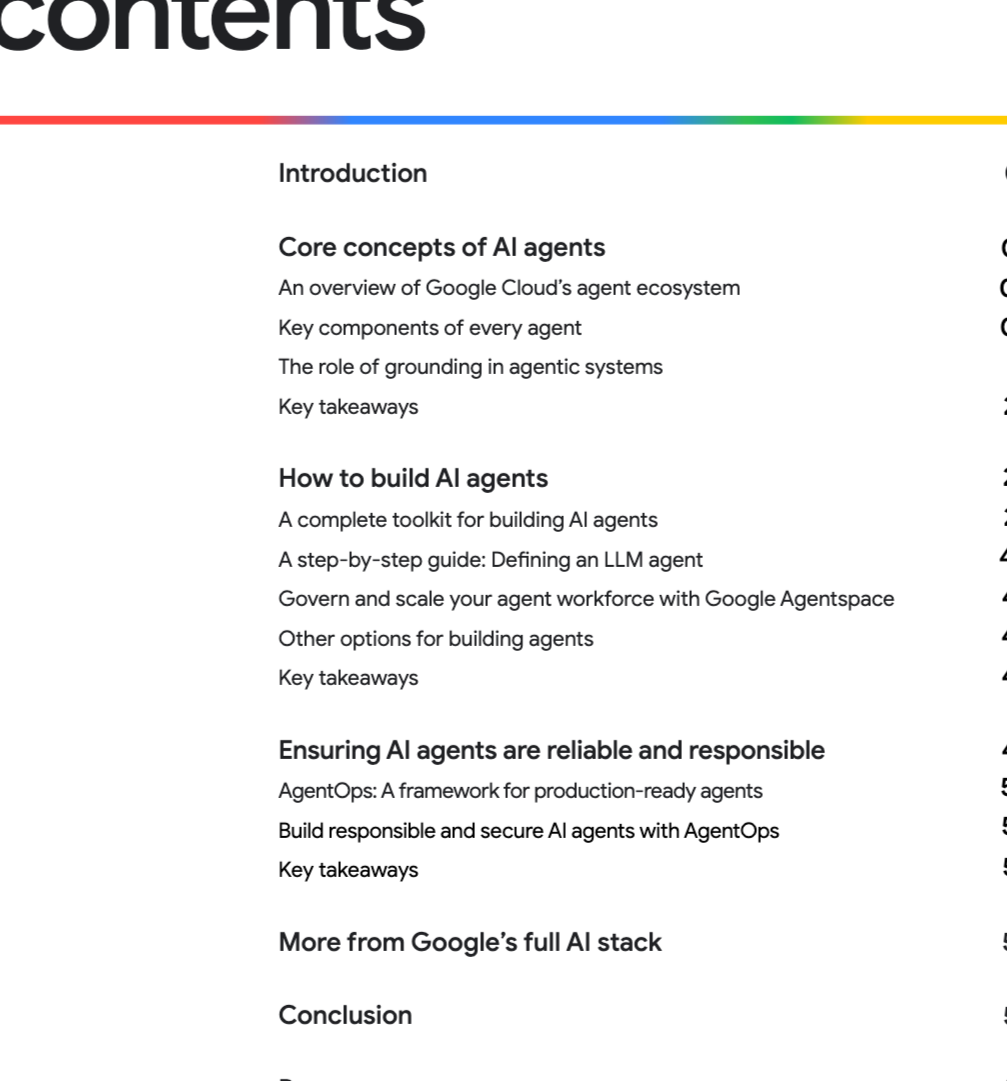
The table of contents outlines the structure of this guide, including introduction, core concepts of AI agents, how to build AI agents, ensuring AI agents are reliable and responsible, more content from Google's full AI stack, conclusion, and resources. Each main section lists subtopics and their corresponding page numbers, providing readers with a clear navigation path.
Source: Page 2
This guide provides a comprehensive technical guide to AI agents, designed to help startups understand and utilize Google Cloud's AI agent ecosystem. The table of contents clearly lists topics from core concepts to building and deploying agents, as well as methods to ensure their reliability and responsibility, providing readers with a structured learning path.
The development of AI agents represents a new paradigm in software engineering, enabling startups to automate complex processes, create new user experiences, and solve problems previously technically unfeasible. This guide aims to provide startups and developers with a systematic, action-oriented roadmap to help them navigate the evolving AI agent landscape and validate their complex paths and implementations.
This guide is intended for users with different levels of experience: for AI newcomers, it's recommended to start with Part 1 to understand core concepts; for those ready to build, jump to Part 2 to create your first agent using ADK; for those who have already built agents, dive into Part 3 to learn how to deploy safely, stably, and scalably. Additionally, Google offers eligible startups up to $350,000 in cloud credits and expert guidance.
This guide focuses primarily on the Agent Development Kit (ADK), sharing concepts and architectural patterns for building robust, scalable agents, while supporting integration with other preferred tools and libraries such as Google's Genkit and Google Cloud Conversational AI products, as well as popular open-source frameworks like LangChain and CrewAI.
Part 1: Core Concepts of AI Agents
Part 1 explores the core concepts of AI agents, explaining their core concepts, purposes, and operating mechanisms, and detailing relevant tools and services available in Google Cloud. This section aims to provide foundational knowledge for understanding Google Cloud's AI agent ecosystem.
This visual element shows a podcast thumbnail for "Part 1: Core Concepts of AI Agents," titled "Section 1 Core concepts of AI agents," and marked as produced by NotebookLM.
 Source: Page 5
This part of the content also offers a podcast version, created with NotebookLM, targeting startup founders and developers. The podcast covers three main paths for building AI agents: using Google AI agent teams, partner tools (like ADK), and pre-built Gemini agents. It also discusses key components of agents, methods for ensuring safety and robustness, and foundational research via techniques like Retrieval-Augmented Generation (RAG).
Google Cloud CEO Thomas Kurian emphasizes that agent workflows are the direction of the future—it's not just about answering questions, but about achieving complex goals or resolving supply chain disruptions, which fundamentally increases productivity. This is a paradigm shift regarding planning and orchestrating multi-step tasks to achieve goals.
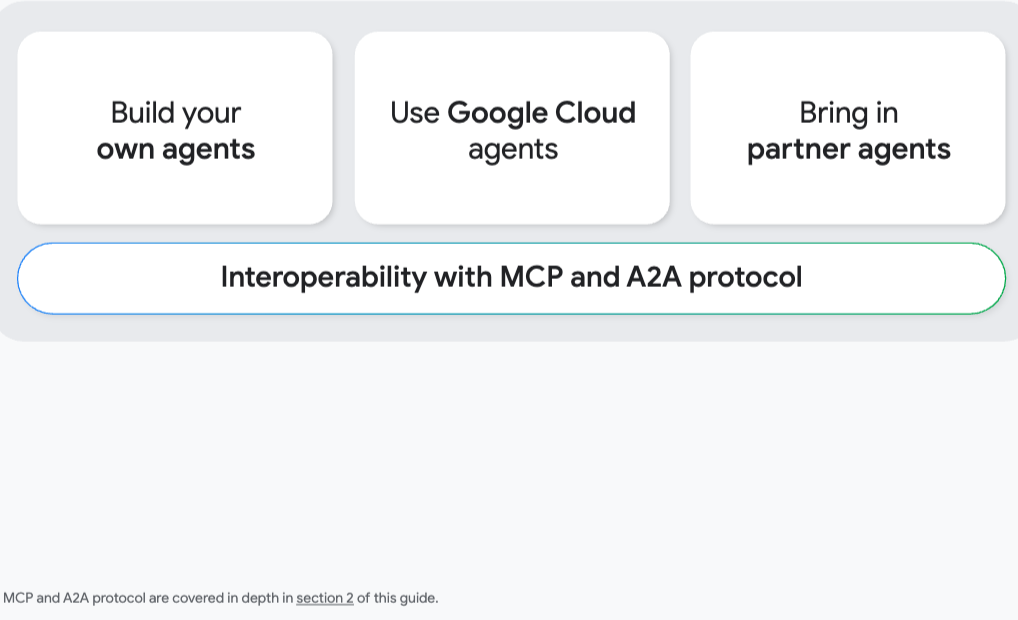
Building Your Own Agents, Using Google Cloud Agents, Bringing Partner Agents, and Interoperability with MCP and A2A Protocols
Google Cloud supports comprehensive development of agent systems, whether building your own, using Google Cloud agents, or bringing in partner agents. This is achieved via the Model Context Protocol (MCP) and Agent2Agent (A2A) protocol, a universal framework designed to ensure agents work together regardless of their source or architecture.
 Source: Page 6
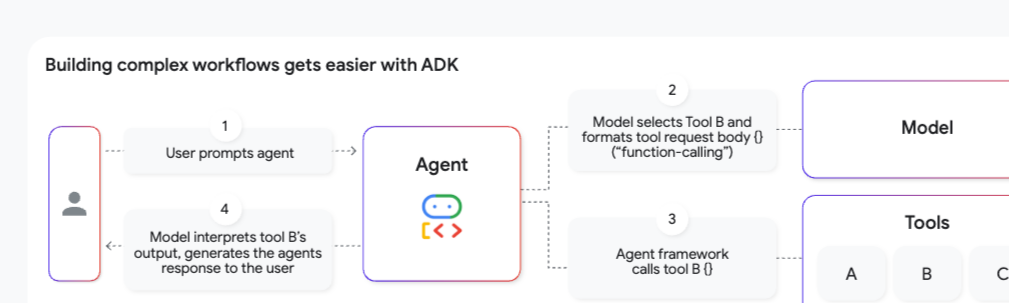
If you wish to build custom agents to handle complex tasks, there are two main options: a code-first approach for maximum control and accelerated development, and a no-code or low-code approach for rapid application development. ADK is a powerful platform for building and deploying AI-driven agents, providing a robust and non-traditional framework for complex workflows.
For startups, ADK is significant because it:
- Automates Workflows: Enables simple multi-step orchestration for complex business problems.
- Builds Defensible API Products: Creates unique competitiveness through internal data.
- Enhances Customer Loyalty: Deepens customer experiences by recalling long-term contextual information.
- Boosts Confidence: Provides high-quality, production-ready agents.
- Focuses on Products over Infrastructure: Deploys agents faster.
Core features of ADK include: Orchestration logic, Tool definition and registration, Context management, and Evaluation and observability.
Google Agentspace is a platform suitable for application-first development, helping startups orchestrate entire AI workflows and build custom agents via its no-code/low-code ADK. Core features include: Unified company-level search, Multimodal data synthesis, Pre-built agent library, and a no-code custom agent builder.
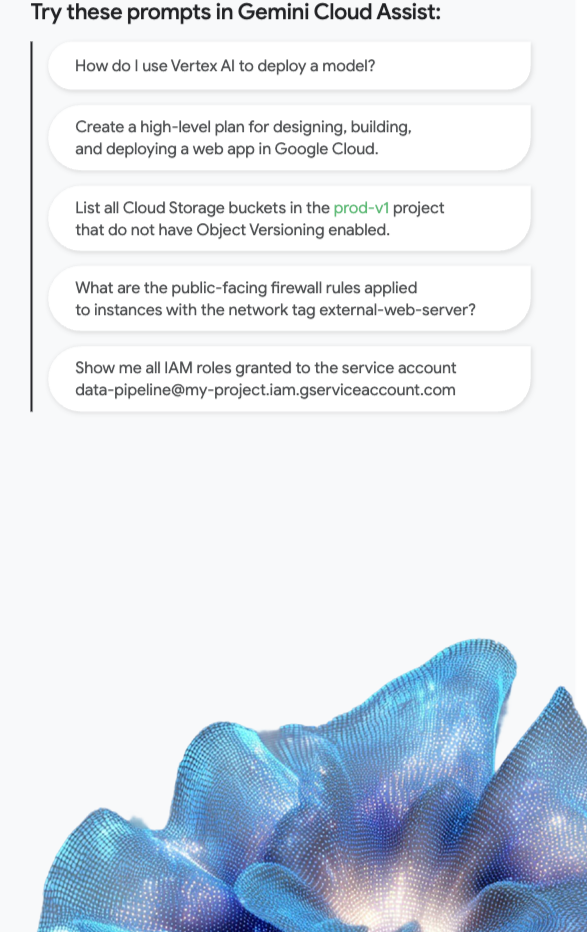
Gemini Cloud Assist and Example Prompts
Gemini Cloud Assist is an AI-powered developer assistant that integrates multiple software development components into a unified platform. Core features include IDE integration, Command-line interface, Git integration, Agent-driven development, and Google Cloud service integration.
 Source: Page 9
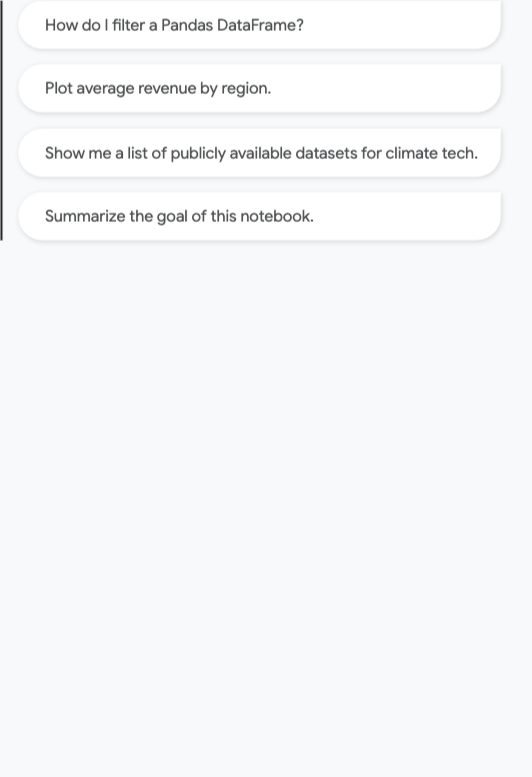
Gemini's core features in Colab Enterprise include: auto-completing and generating Python code, explaining code logic, filtering and visualizing data, recommending public datasets, and summarizing entire Notebooks.
 Source: Page 10
Model Selection and Tuning
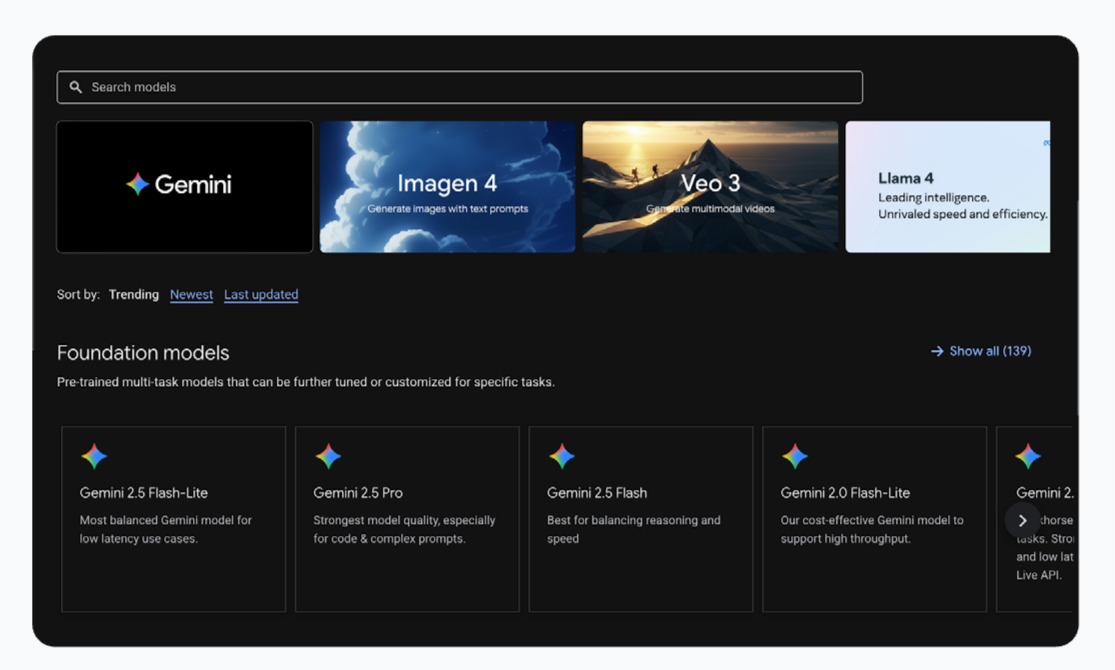
Choosing the right model is critical. The document introduces a powerful principle: applying multiple specialized agents at the system level. For example:
- Gemini 1.5 Flash-Lite: Ideal for early prototypes and low-latency tasks, cost-effective.
- Gemini 1.5 Flash: Balances quality and speed, for high-volume applications.
- Gemini 1.5 Pro: Suitable for complex, multi-step reasoning and advanced features.
 Source: Page 12
Data Architecture and Storage
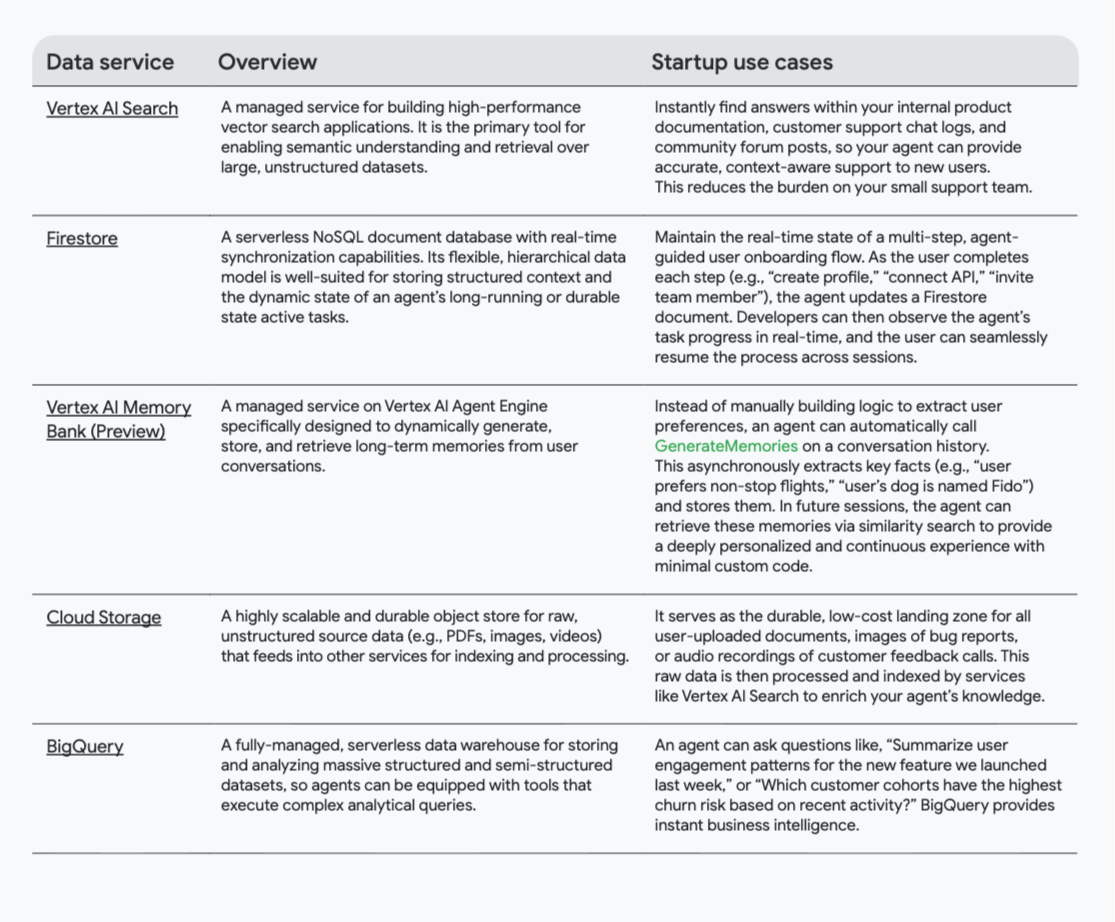
The data architecture of an agent system requires three main components:
1. Long-term Knowledge Base
Used for grounding and retrieval. Supports RAG workflows, containing structured knowledge bases and operational data lakes.
 Source: Page 14
2. Working Memory
Manages session context and short-term state, providing ultra-low latency access.
 Source: Page 15
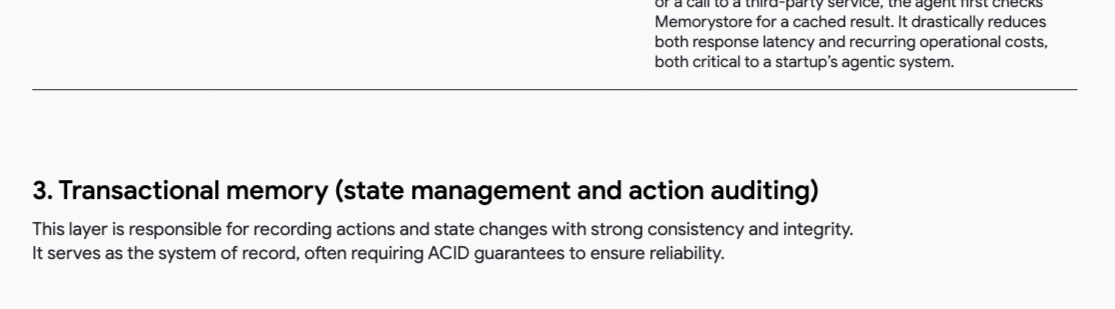
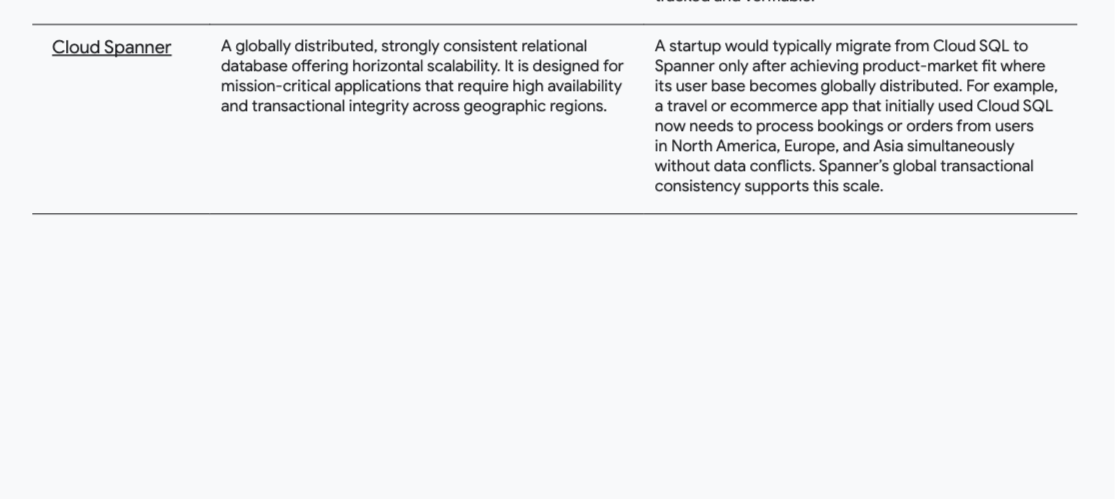
3. Transactional Memory
Records operations and state changes with strong consistency and integrity.
 Source: Page 15
Agent Orchestration and ReAct Framework
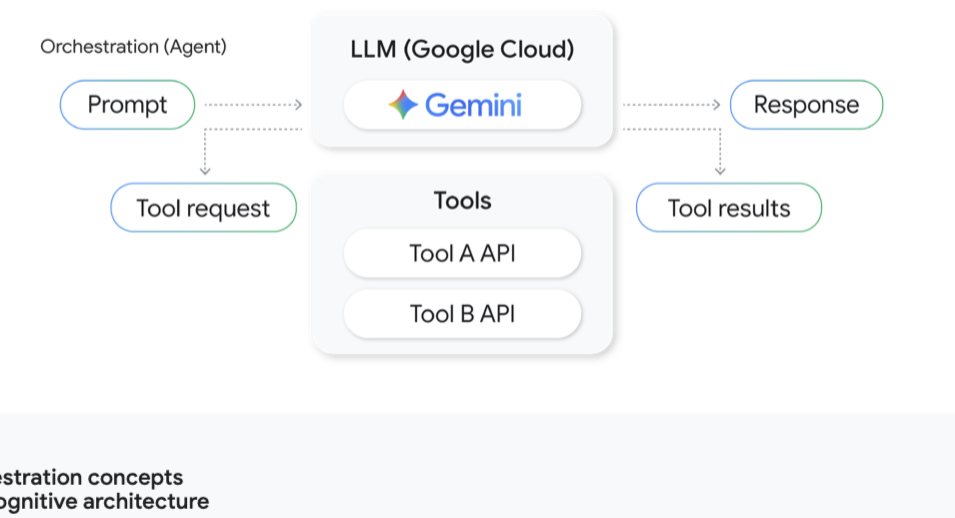
Agent orchestration is the core operational function guiding agents through multi-step tasks. It determines which tools are needed, how to call them, and how to combine outputs.
 Source: Page 16
The ReAct (Reason + Action) framework establishes a dynamic multi-turn loop: Evaluate (current goals) -> Action (call tools) -> Observe (receive output).
Grounding and RAG
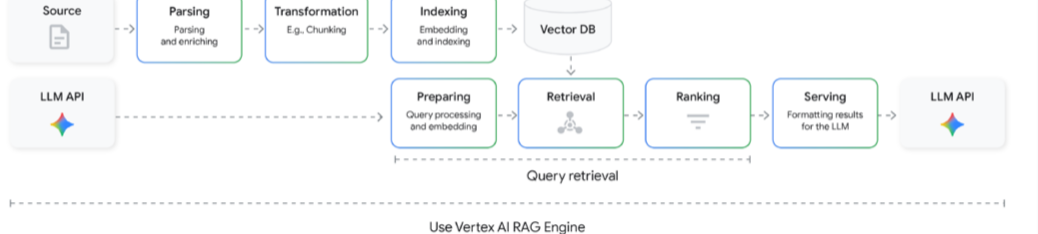
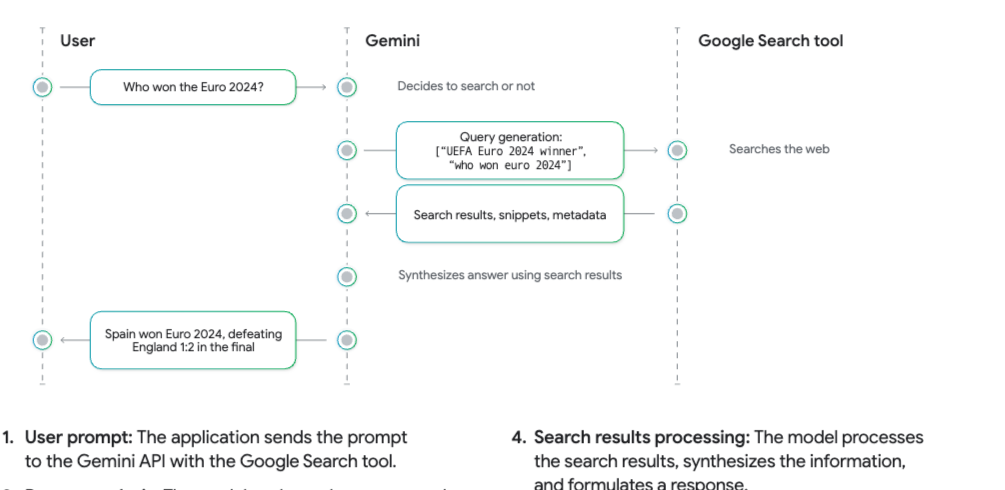
Grounding improves the factual accuracy of responses by connecting LLMs to verifiable data sources. Vertex AI RAG Engine provides a framework for developing context-augmented LLM applications.
 Source: Page 20
GraphRAG and Agentic RAG
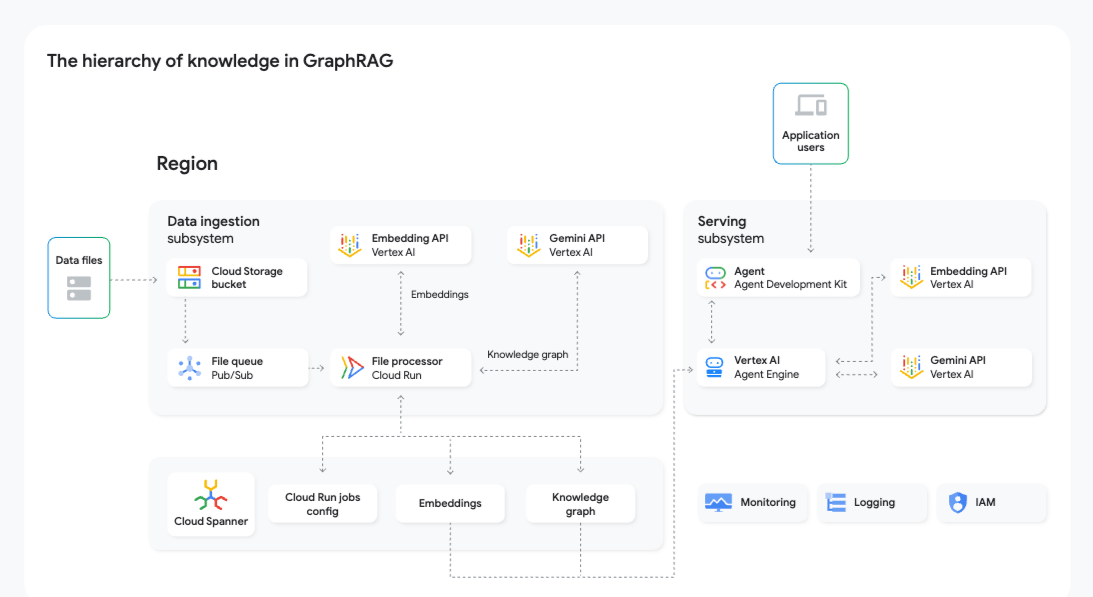
- GraphRAG: Helps AI agents understand concepts by building knowledge graphs rather than just matching phrases.
- Agentic RAG: Shifts agents from passive retrieval to active knowledge construction, providing more accurate responses via complex queries and multi-step planning.
 Source: Page 21
 Source: Page 23
 Source: Page 24
Part 2: How to Build AI Agents
This section explores how to utilize the Google Cloud ecosystem, particularly ADK, to build production-ready agents.
 Source: Page 28
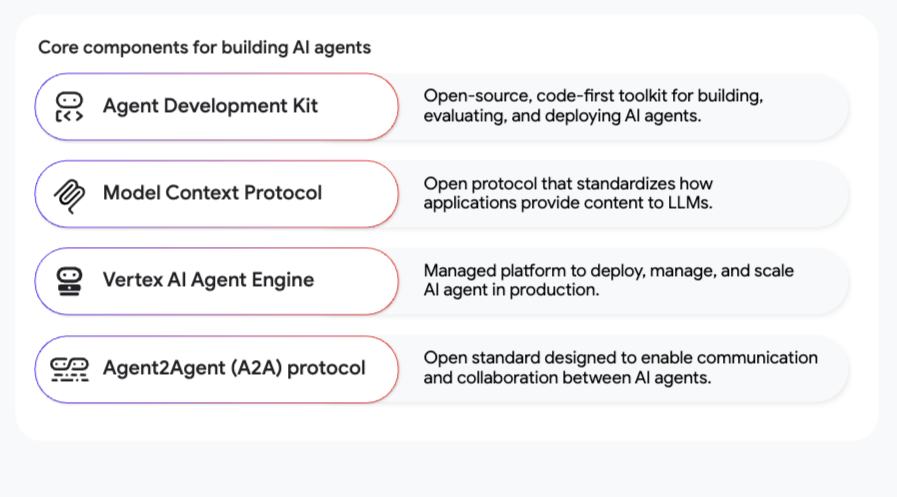
Core Components for Building AI Agents
- ADK: An open-source, code-first toolkit.
- MCP: A protocol for standardizing how LLMs handle content.
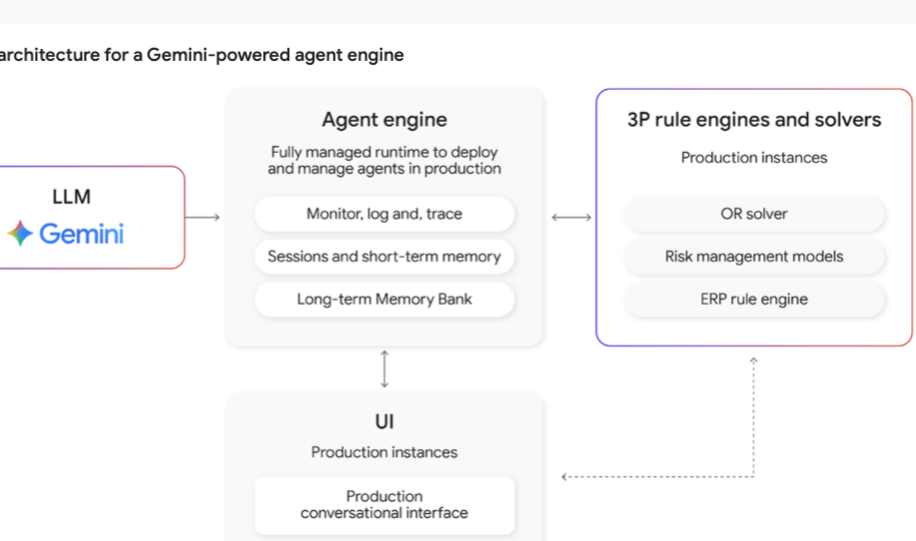
- Vertex AI Agent Engine: A managed platform for managing and scaling agents.
- A2A Protocol: A standard for enabling communication between agents.
 Source: Page 29
 Source: Page 30
ADK Agent Types
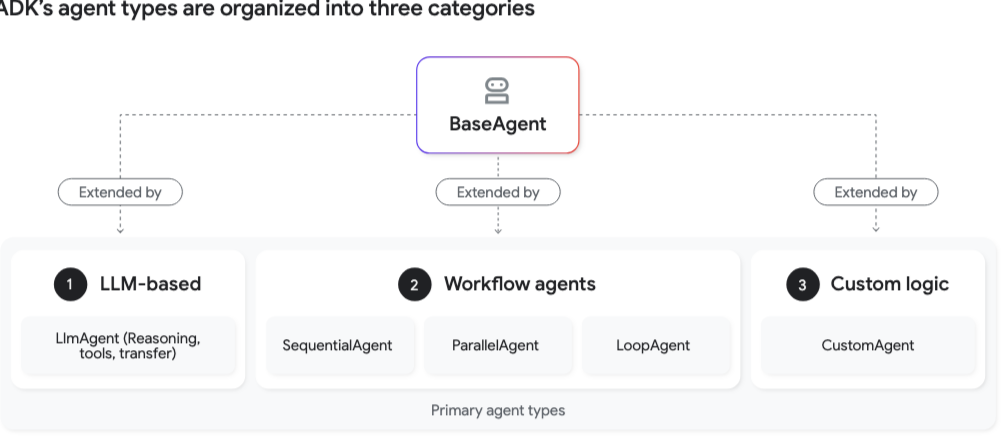
ADK provides three main agent categories, all extending from BaseAgent:
- LLM-based Agents (
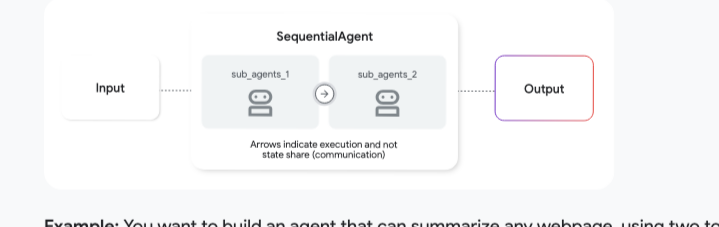
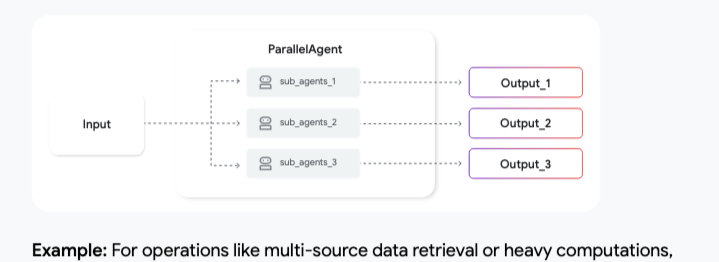
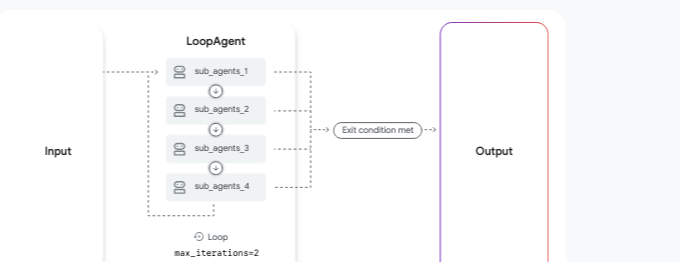
LlmAgent): For complex reasoning and dynamic decision-making. - Workflow Agents: Including
SequentialAgent,ParallelAgent, andLoopAgent. - Custom Logic Agents: For unique customization needs.
 Source: Page 31
 Source: Page 32
 Source: Page 33
 Source: Page 33
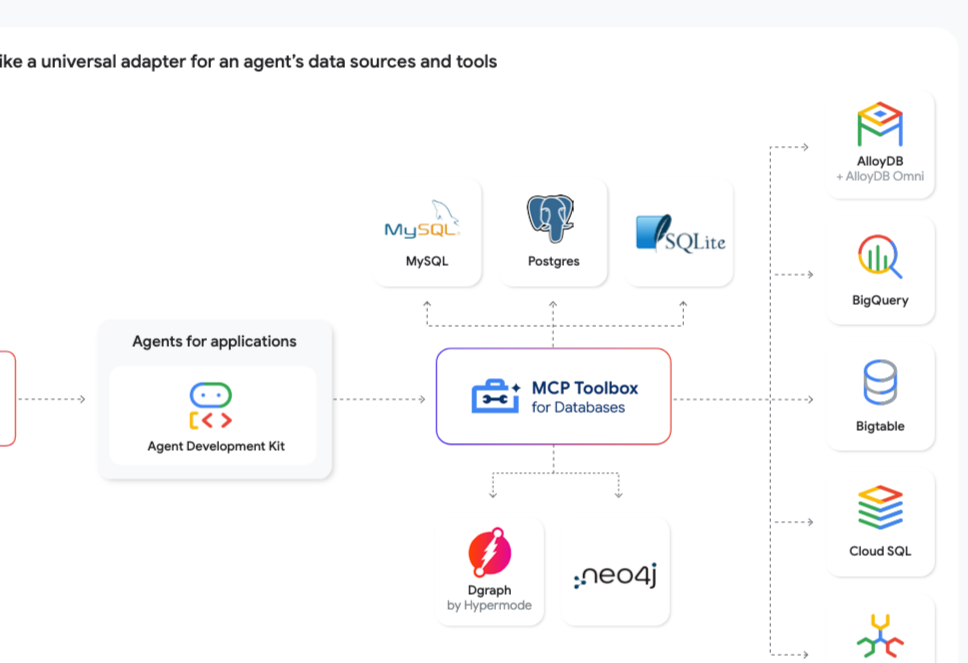
MCP: A Universal Adapter
MCP is an emerging open standard for connecting AI agents and LLMs with external data sources and tools.
 Source: Page 36
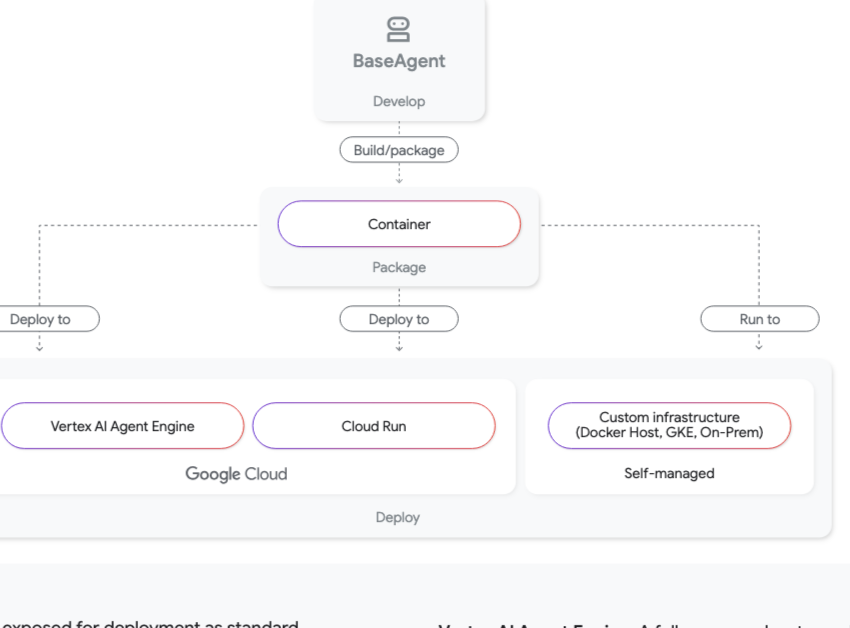
Deploying to Managed Runtimes
Vertex AI Agent Engine is the recommended target for ADK deployment. Agents are exposed as standard web services via FastAPI and can be containerized.
 Source: Page 38
 Source: Page 39
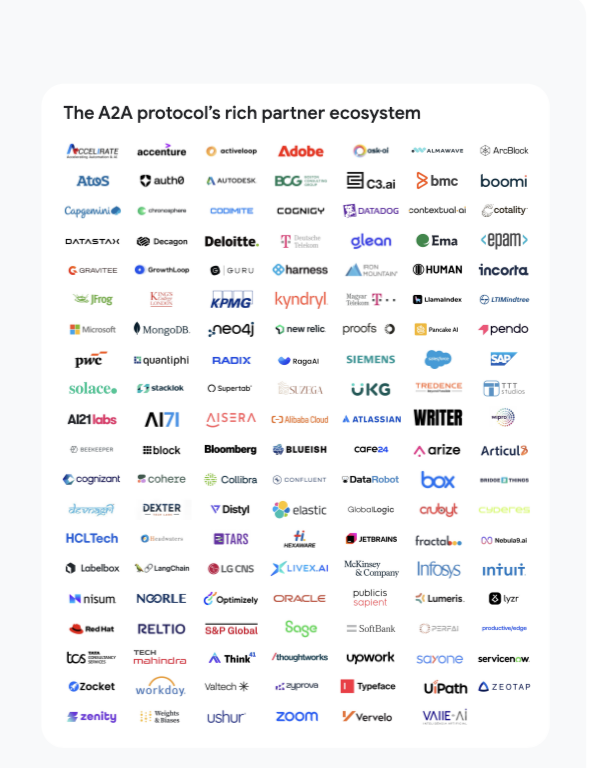
A2A Protocol: Communication and Collaboration
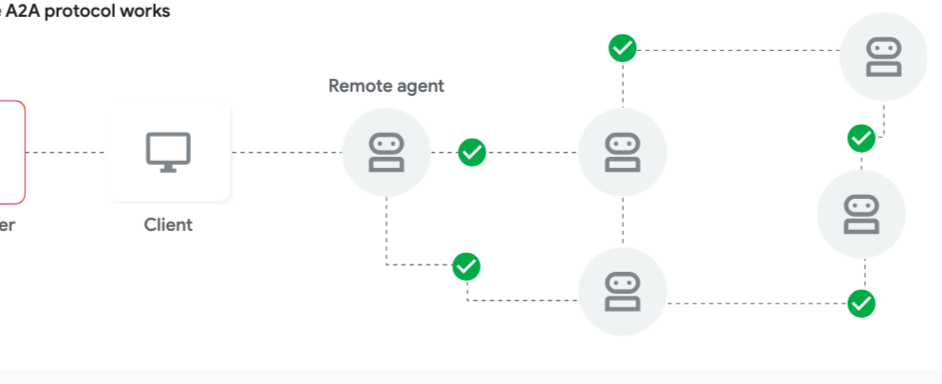
The A2A protocol ensures agents can discover, communicate, and coordinate their behaviors.
 Source: Page 40
 Source: Page 40
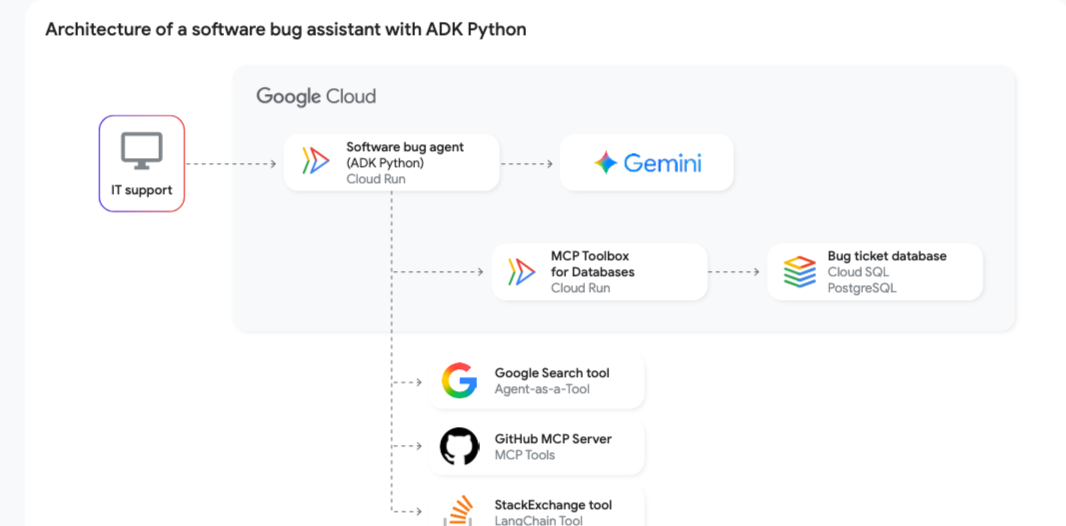
Step-by-Step Guide: Software Bug Assistant Example
- Define Identity: Name (e.g.,
software_bug_triage_agent), Description, Model (e.g.,gemini-1.5-flash). - Guide Instructions: Role (e.g., experienced Engineering Manager), constraints, and tool usage instructions.
- Equip with Tools: Functions like
get_user_details,search_codebase, etc.
 Source: Page 43
Google Agentspace: Managing Agent Workforce
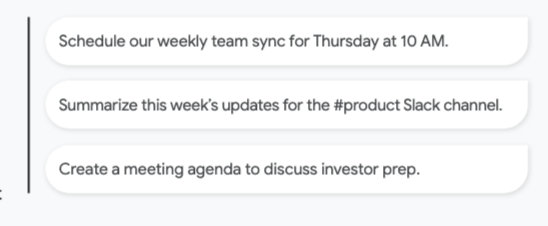
Google Agentspace allows organizations to unify data access, achieve team-level automation, and govern agent clusters.
 Source: Page 45
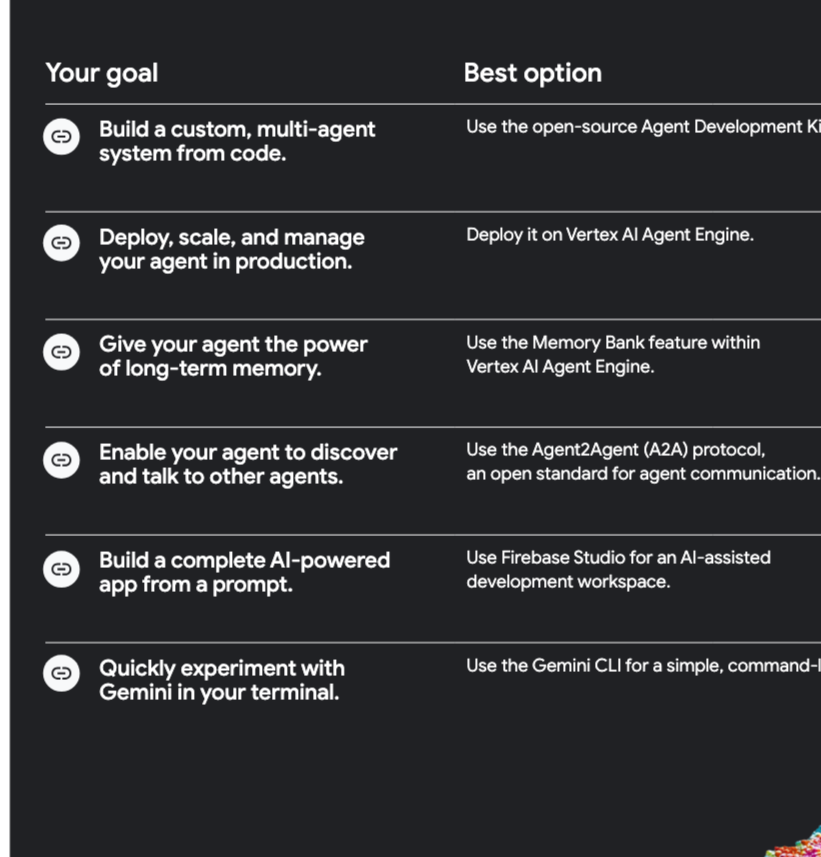
Firebase Studio and App Prototyping Agent
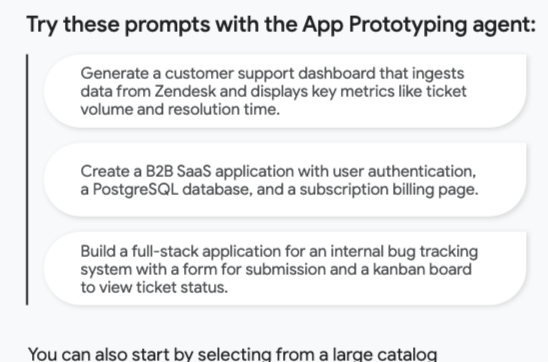
Firebase Studio is an integrated cloud workspace for the entire development lifecycle from UI prototyping to code generation.
 Source: Page 47
 Source: Page 48
Part 3: Ensuring AI Agent Reliability and Responsibility
Achieving production-level reliability requires rigorous engineering methods focusing on correctness, performance, scalability, safety, and responsibility.
 Source: Page 51
Agent Operations (AgentOps)
AgentOps is a systematic, automated, and reproducible framework. It includes a multi-layer evaluation framework:
- Component-level Evaluation: Deterministic unit tests.
- Trajectory Evaluation: Validating procedural correctness in ReAct loops.
- Result Evaluation: Semantic correctness and factual accuracy.
- System-level Monitoring: Real-time monitoring in production.
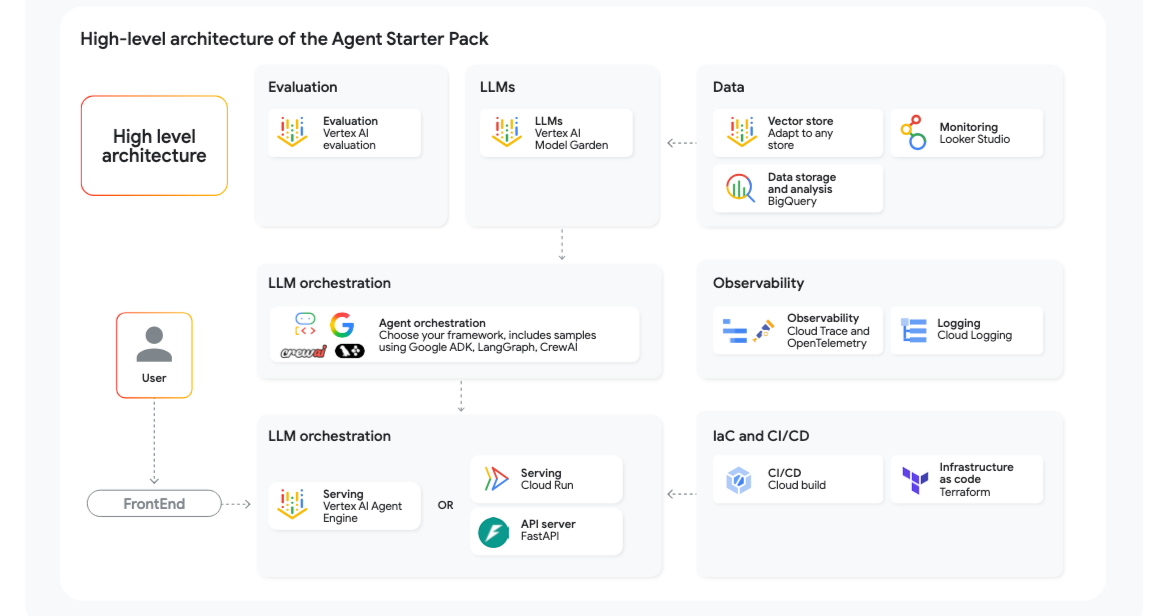
Agent Starter Pack Architecture
Agent Starter Pack provides Infrastructure as Code (Terraform), CI/CD pipelines, observability, and data integration templates.
 Source: Page 54
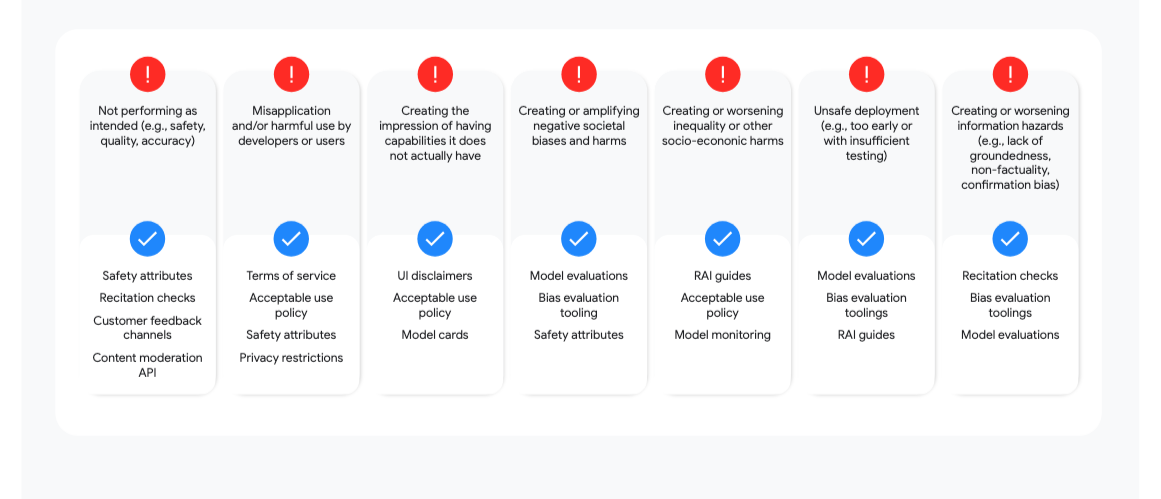
Risks and Safeguards
Building responsible AI involves mitigating risks such as poor performance, harmful usage, and bias.
 Source: Page 56
More from Google's Full Stack AI
Gemini 2.5 Flash Image (Nano Banana)
Supports merging multiple images, maintaining character consistency, and targeted natural language editing.
 Source: Page 60
Veo and Imagen
Generate high-quality video and images from text prompts.
 Source: Page 60
 Source: Page 60
Conclusion and Resources
This guide aims to provide an evolution path from prototype to production AI systems for startups. Google Cloud supports innovation via its full-stack AI, flexible frameworks (ADK), and operational principles (AgentOps). Further resources include Vertex AI Platform, BigQuery, Cloud Run, Google AI Studio, etc., providing comprehensive support for building next-generation intelligent systems.