
This title is too "arrogant." When I wrote it down, it startled me too, but I’m keeping it because I can't think of a more fitting one for now.
I’ve been "off-task" for quite a while: always talking about this and that, neither writing much code nor doing much research, just constantly airing my personal feelings—feelings that might seem like "baseless whining."
Views, of course, aren't high. It's impossible to completely ignore that, but it was expected.
Yet, the moment this title came to mind, I suddenly realized: okay, things can pretty much end here. It’s like a clean canvas that I’ve been doodling on haphazardly every day; I look at it and say, "That's enough, let it be."
The excuse I give myself is "hitting a bottleneck, trying to find the vibe," but in reality, there are still many items on my "to-do list" left unfinished. So, it's just laziness and being lured by the outside world.
For example, this morning, I was once again seduced by the sun after the rain. Taking advantage of the gap before an online meeting, I grabbed my camera and went for a spin with just one goal: to photograph flowers.
I didn't export the photos in chronological order, but when posting them below, I re-sorted the folder to return to the sequence of the shoot—the sequence of "stealing a moment." Since this is the final "whim" on this canvas, I might as well post every exported photo. Many with "correct" eyes will say they aren't beautiful, but since last year, I’ve lost my aesthetic sense for photos. Instead, I find them all quite interesting.

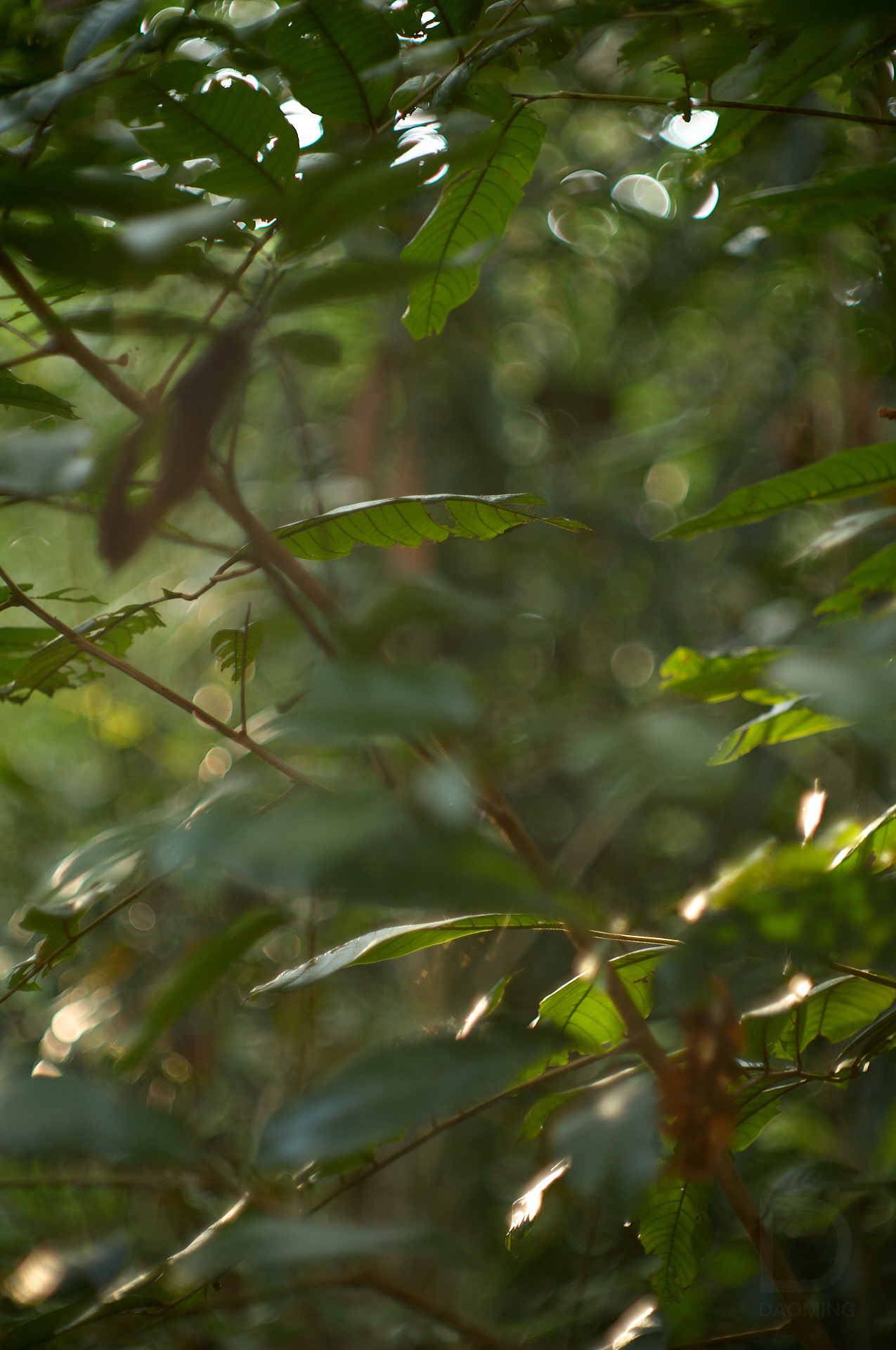










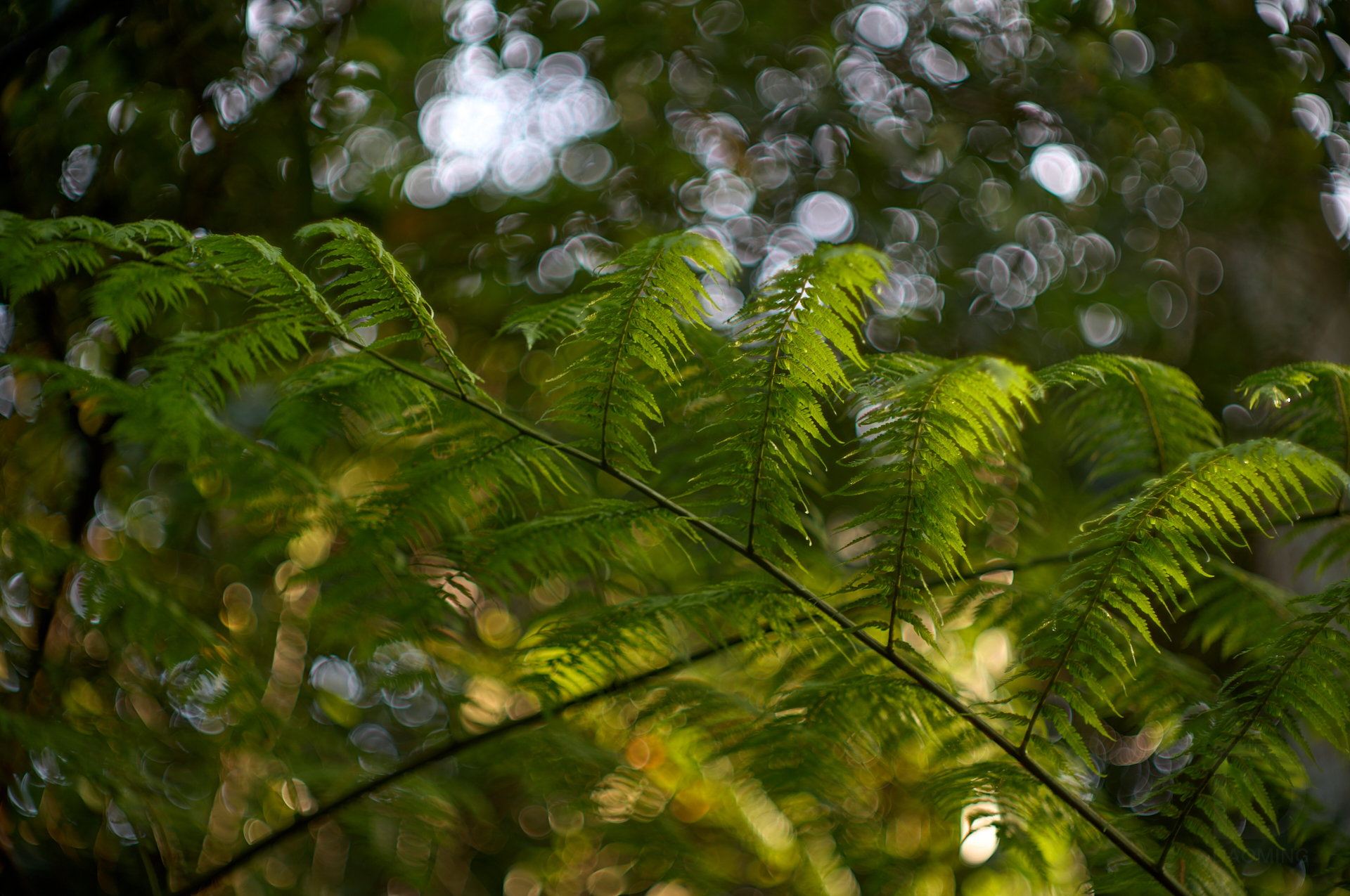





There are so many interesting things in this world, and plants and flowers are certainly among them. As I photographed the flowers, a very strange feeling slowly emerged.
If these plants truly exist as they are, then every corner of the world, every different moment, represents infinite combinations. As I walked along the path photographing flowers, I was doing calculations in my head, concluding that we are probably at least 10 orders of magnitude away from Physical AI in terms of data;
If these plants truly exist, then everyone's eyes are different "compressors" (maybe models?), but what we see cannot be directly turned into data that computers can process. Thus, we need camera lenses to collect it, and the data obtained from different cameras and lenses will vary;
If these plants truly exist, the data from different devices is already a "lossy compression" of the real world. I like large apertures and old lenses, so the output of this model (camera-lens combo) will always have this particular tone. This is the model’s bias;
If these plants truly exist, rational standardization requires using equipment that is as color-accurate as possible and where various optical defects are corrected (color charts, MTF, chromatic aberration, spherical aberration, distortion, etc.—fix everything possible). Thus, we get "the most objective description of the real world";
Then, we hope that perhaps without so much data input, through models and algorithms, we can achieve a kind of generalization: regardless of the impact of sun, dew, or wind, it can distinguish all flowers and grass, it can tell us everything we want just by recognizing the physical world anytime, anywhere...
I’m sorry, but at this point, I suddenly lack the imagination for "Super Artificial Intelligence."
But what if there are many people in this world who actually like optical defects, different lighting, different rain, different breezes, or even the moon? Can it generalize that?
Today, the lenses I use most often are basically products of the last century—some are older than I am. I know more and more people are getting into this (I rediscovered it: fifteen years ago I only liked large apertures; ten years ago I only liked small apertures, large format, deep depth of field where every pixel was sharp; and last year I fell back in love with the "old stuff" in my dry box).
"Metaphysics" (or character) is the most common and appropriate evaluation for this taste. Plenty of standardized KPIs can prove that this "metaphysics" isn't even worth mentioning—that every bit of it is a defect, an error, caused by the technical limitations of the time. But why do some people love it? Why are people willing to spend a fortune on it?
And why do those standardized KPI-driven products keep getting cheaper?
Is it because whatever can be standardized and turned into a KPI becomes replicable, and thus the cost keeps dropping?
So, our goal in pursuing Physical AI is to keep lowering costs, right? I know at least a few people think this way, and Elon Musk’s name is certainly among them.
I never dare to judge him. I think he is right, in the world he sees.
Many people love cars, supercars, and the joy of driving. L5 autonomous driving will certainly arrive in the near future. Today we regulate that so-called smart-driving vehicles can only drive on restricted roads; perhaps, when L5 arrives, we will regulate that "humans are not allowed to drive manually." "Driving pleasure" might only become a luxury on a race track, or a cheap commodity in a game world;
Autonomous driving is perhaps the closest Physical AI to us. So close that for the generation born after 2010, "driving pleasure" might be a term that only appears in history books.
If these plants exist, and if I were to come to the same spot at the same time next year, with the same dew and breeze, and the flowers remained exactly as they were the moment I pressed the shutter today—and if I used the same camera, same lens, same camera temperature, and same settings to take the same photo—the emotions and feelings reflected in my heart would likely be completely different. Or, when I look back at today's photos at some future moment, they will all feel different too;
What kind of Physical AI do we want? One that gives the same answer this year and next year to remind us it’s the "standard answer"? Or one that accompanies you every moment, experiences all your changes throughout the year, and accurately describes the shifts in your emotions?
Change the time, change the place, change the person, and the flowers naturally look different.
Actually, we all have the answer. We all want to be that highly individualistic "human," yet we increasingly become "gods" bound by standardized KPIs. Then, we hope to use standardized KPIs to infinitely manufacture "gods" to "suffer" in our place, so that we can be "human"...
Wait, do we hope to create an individualistic "human" identical to our inner desires?
Then, what about ourselves?
Eyes, nose, ears, the five senses...
This world is truly beautiful!