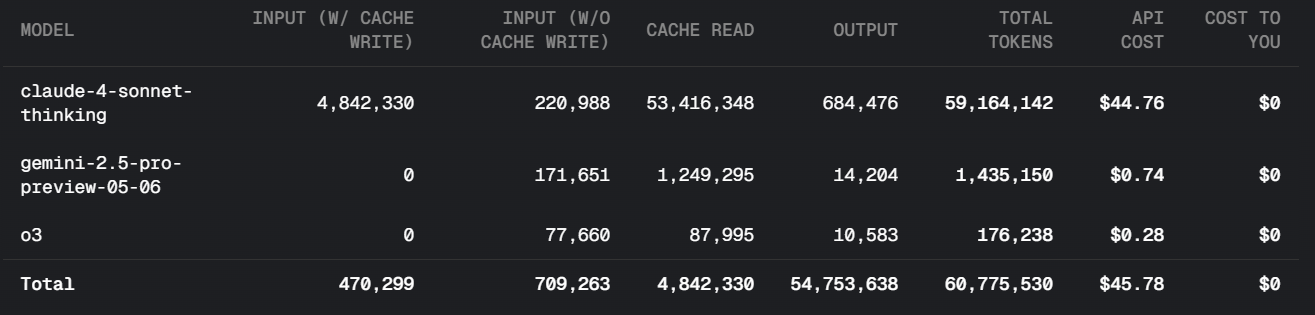
After Cursor changed its pricing strategy, it took only two days for me to exhaust the limit of my monthly Pro subscription.
Although this limit feels quite "metaphysical"—since it seems you can keep "vibing" along—the constant reminder that your quota is about to run out feels unpleasant. You never know when the code generation will suddenly come to a halt. Naturally, over the past period, my usage of Claude Code has also significantly increased. In truth, compared to Cursor, there isn't a particularly remarkable difference, as the underlying models are both Claude. I currently have no way to see usage statistics from the backend similar to Cursor's, so while it feels like Claude Code might be more token-efficient, there's no proof. To cope with "quota anxiety," I've also started using Gemini CLI as a supplement.
To be fair, Gemini CLI has a higher one-shot code success rate. The issue is that if you are generating a web page, as mentioned in several previous articles, the model is quite "restrained," and the visual effects fall short (unless you provide extremely detailed style and content requirements).
For example, as I gradually migrate my entire workflow to the logic of AI Coding and AI Search, I began to need a Kanban board for management. Previously, I would do this in Obsidian; now, I simply wrote one to be hosted on Cloudflare for management, which makes mobile access and synchronization much easier.
This is the result returned by Gemini CLI in one go:

The functionality is all there, and the drag-and-drop (DnD) logic is correct, but it is, well, ugly.
Left with no choice, I let Claude Code "beautify" it. After four or five rounds of debugging and modification, yes, the desired effect was achieved.
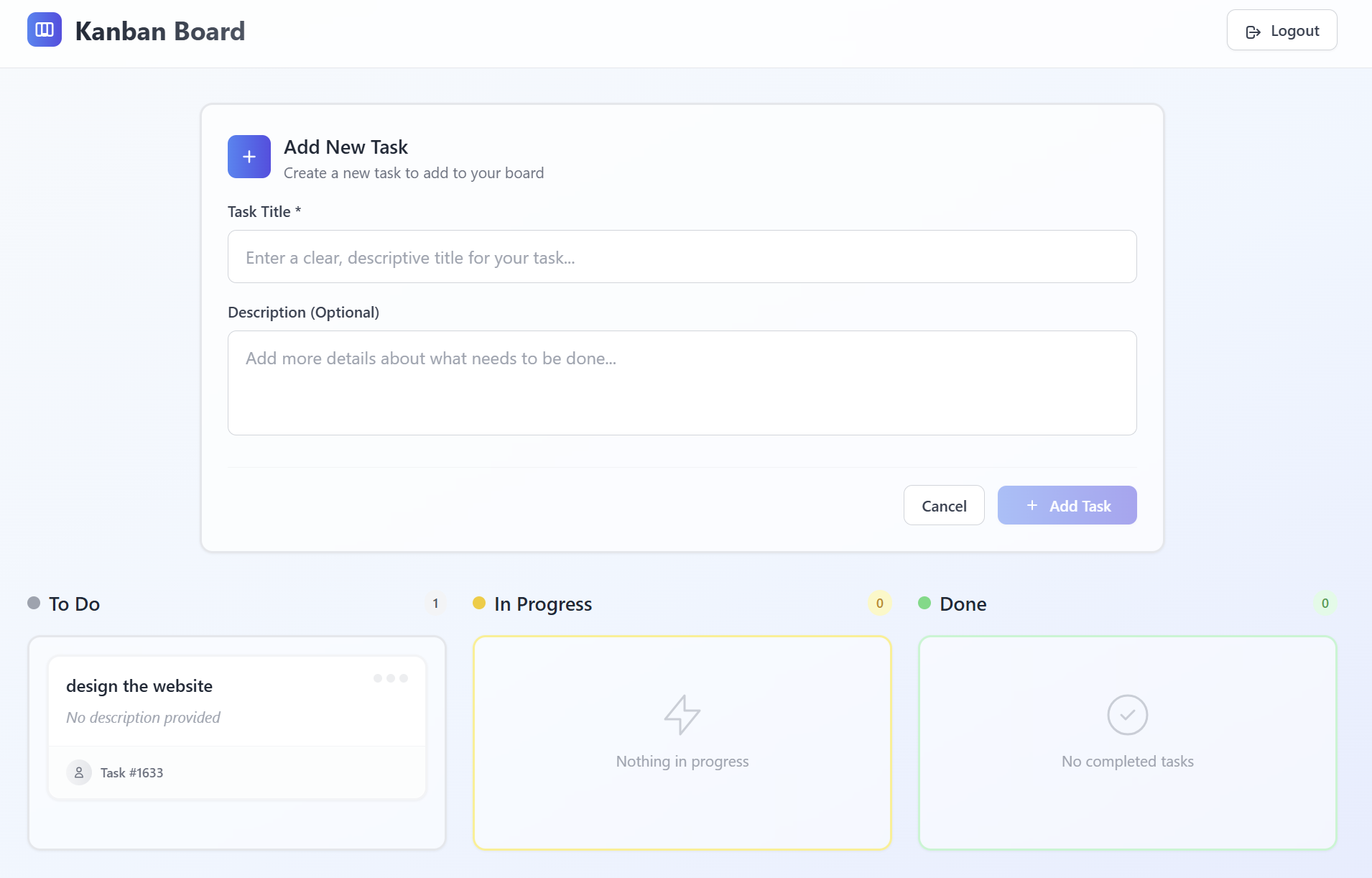
This project is very simple, and for the models, the difficulty is almost non-existent.
However, it reinforces a certain fact: the essence of model output is data. This is true not just for pre-training data (because if you give Gemini complete requirements, it can also look great), but more so for the data in the RL (Reinforcement Learning) phase and the data used during Agentic implementation.
I still maintain that today's AI has little to do with "intelligence" and everything to do with data.