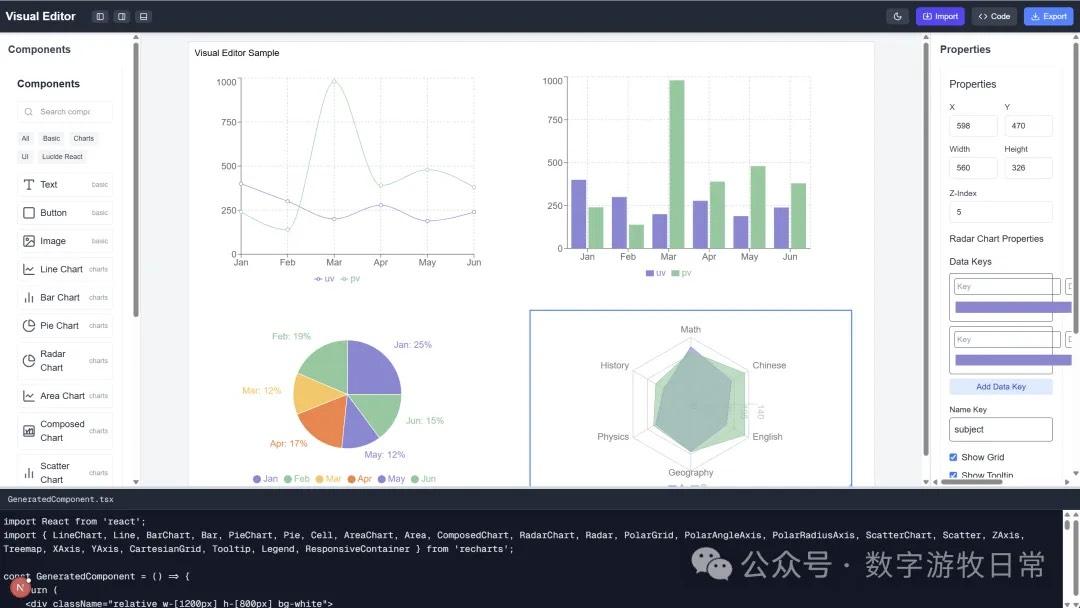
I've been quite busy lately, deeply involved in a project co-created with Cursor. After experimenting with numerous version concepts, I've finally developed a base version that can be further improved.
Everything was completed within Cursor. The underlying models were primarily Claude 3.7, with some parts using Gemini 2.5; my role was essentially "vibe coding."
Before arriving at this relatively satisfactory version, I established and abandoned over ten engineering projects within about a week. I wouldn't say the abandoned projects were valueless; I borrowed valuable code, architecture, and UI elements from each version to eventually piece together the new project.
There are still some bugs to iron out. Once finished, I will upload it to GitHub and make it open source.
Features and Highlights:
- Drag-and-drop React component layout;
- Direct mapping to React TSX code, similar to Claude's Artifact generation. I previously wrote a rendering tool where the generated code displays correctly;
- Support for code editing, though component property editing is still being optimized;
Current Shortcomings:
- Event mechanisms in property editing still need to be added (e.g., addDataKey);
- Direct preview functionality needs to be integrated;
- The component library isn't rich enough yet (not a major issue), and the visual effect of the component list box needs adjustment;
- The code editor and property editor functionalities need strengthening;
Actually, before this, I used Deep Research to look into existing open-source solutions like GrapeJS, ToolJet, Puck, OpenBlock, Craft JS, etc. However, rather than investing heavily in the learning curve of those codebases, it was better to use AI to rebuild step-by-step. This is perhaps the greatest challenge AI poses to software engineering today: It is often better to rebuild than to inherit.
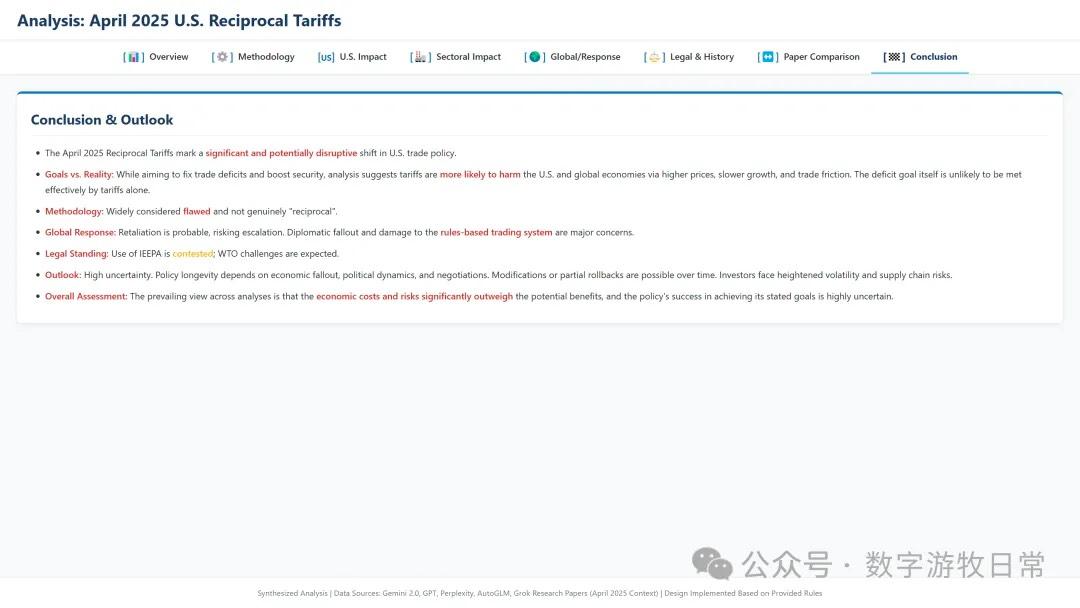
While working hard with Cursor + Claude 3.7 + Gemini 2.5, I also used five versions of Deep Research to conduct an in-depth study on the latest "tariff" issues (current as of the morning of April 4, Beijing time).
Simple conclusion: OpenAI is ahead by a mile, providing the most extensive and complete content.
I used Gemini 2.5 to generate a set of visualizations; screenshots are as follows:
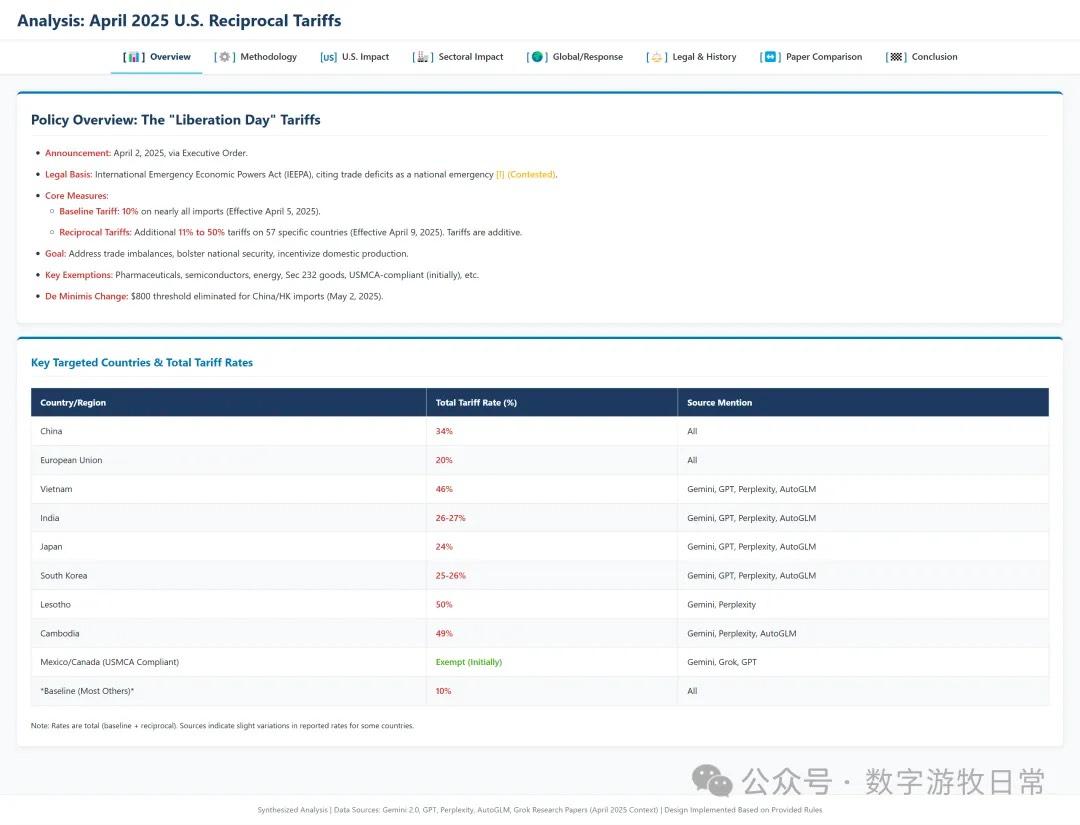
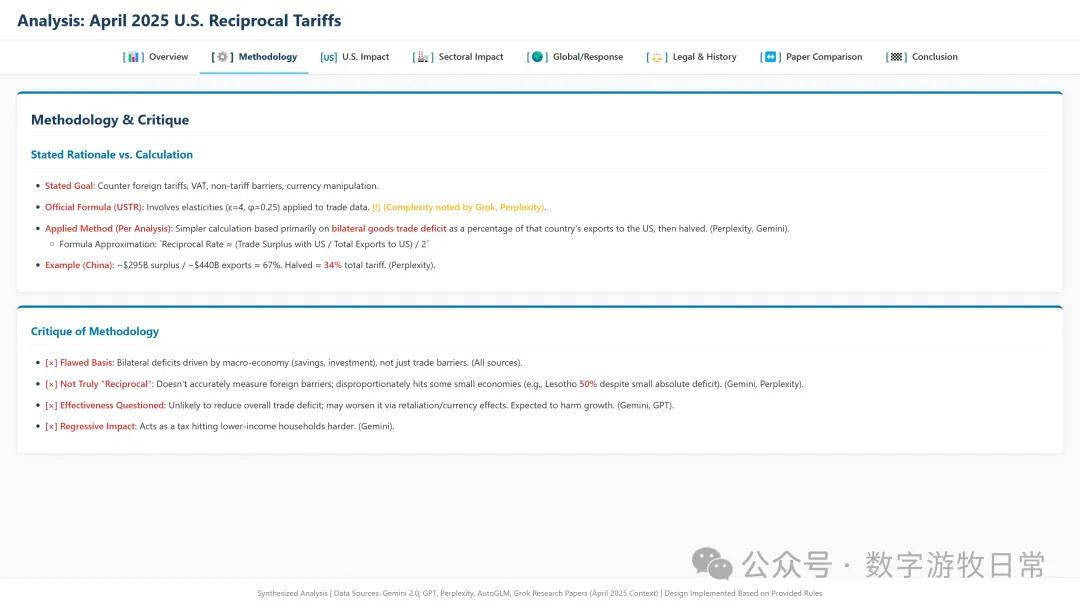
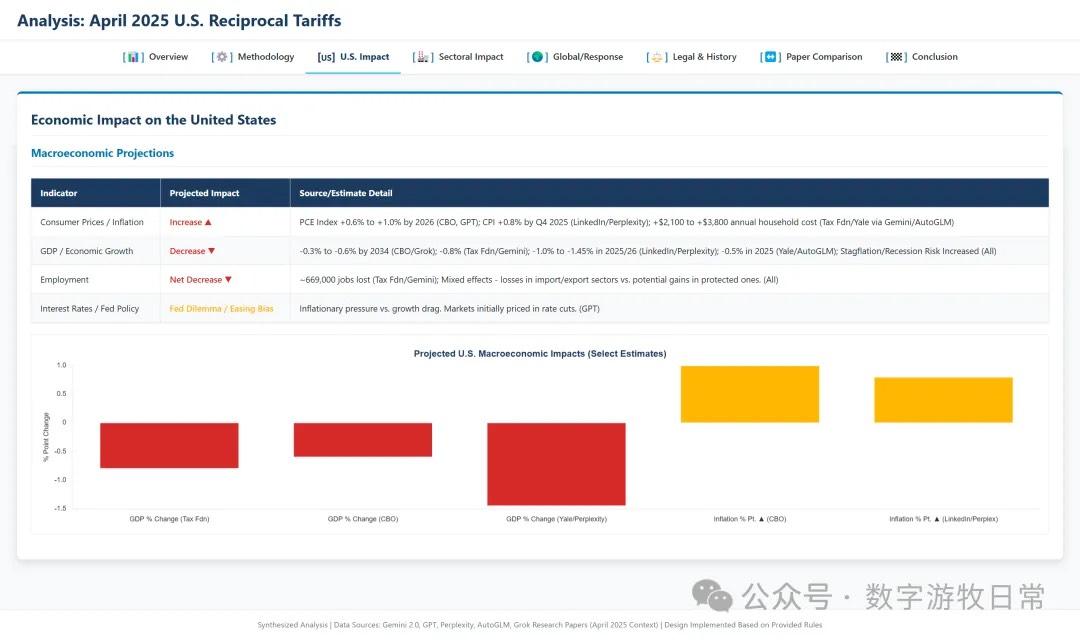
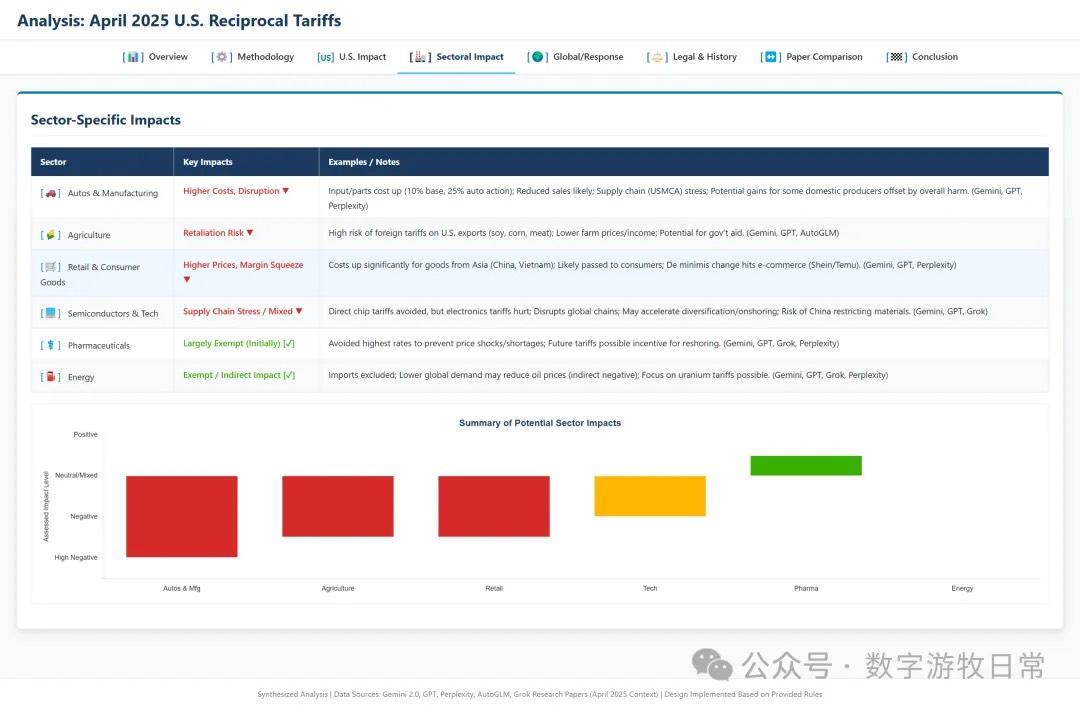
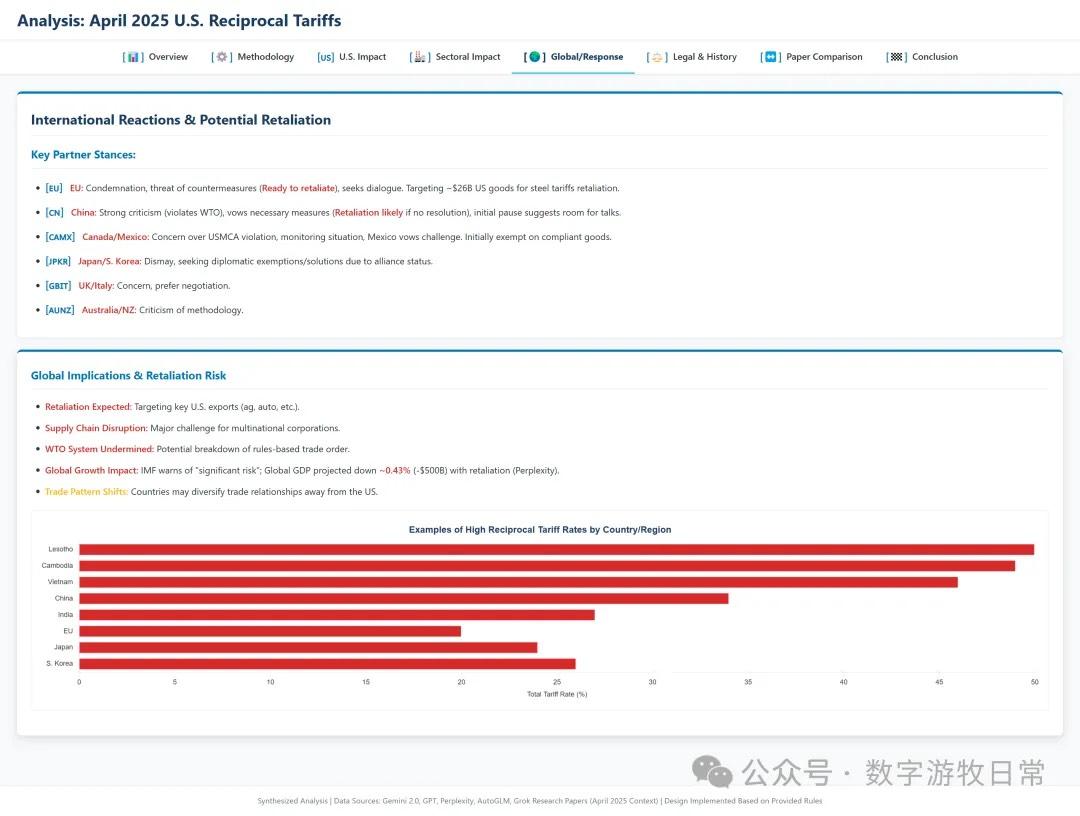
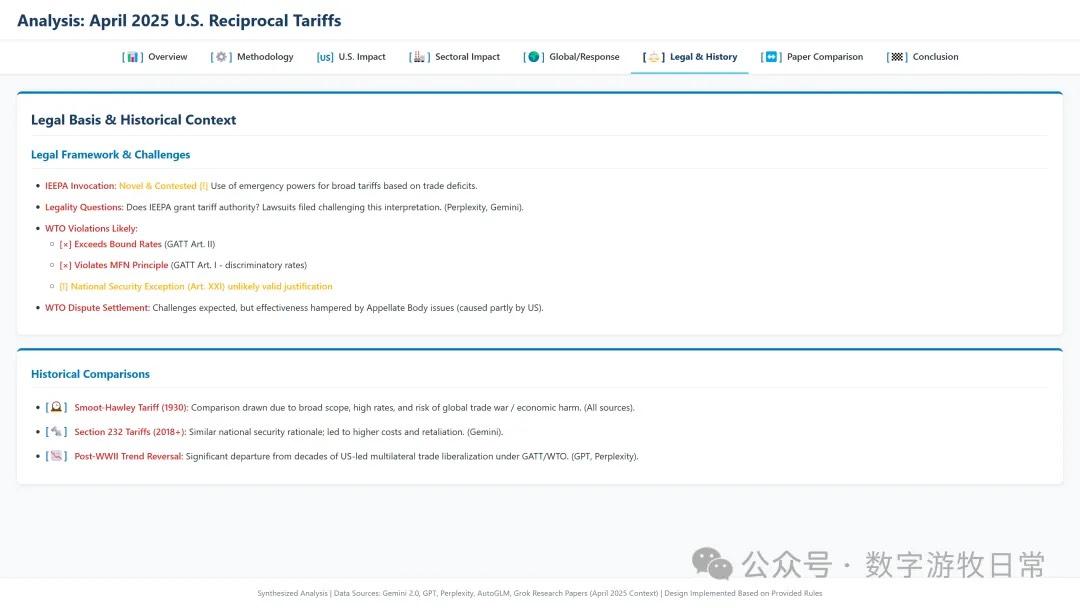
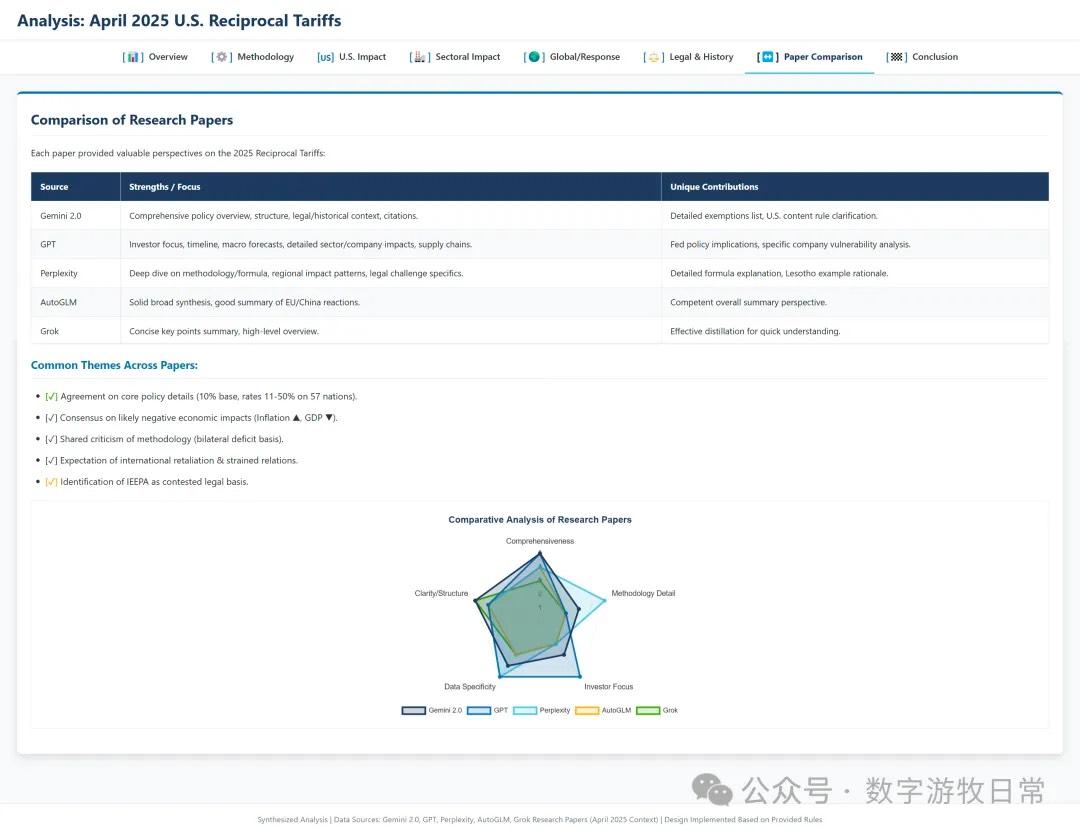
Yes: Rebuilding in place; multi-threaded parallel work; full visualization; self-built templates and workflows.
This is my current standard way of working.
The world might indeed be a makeshift stage, but AI is not, and neither is the emotional warmth that exists above rationality.