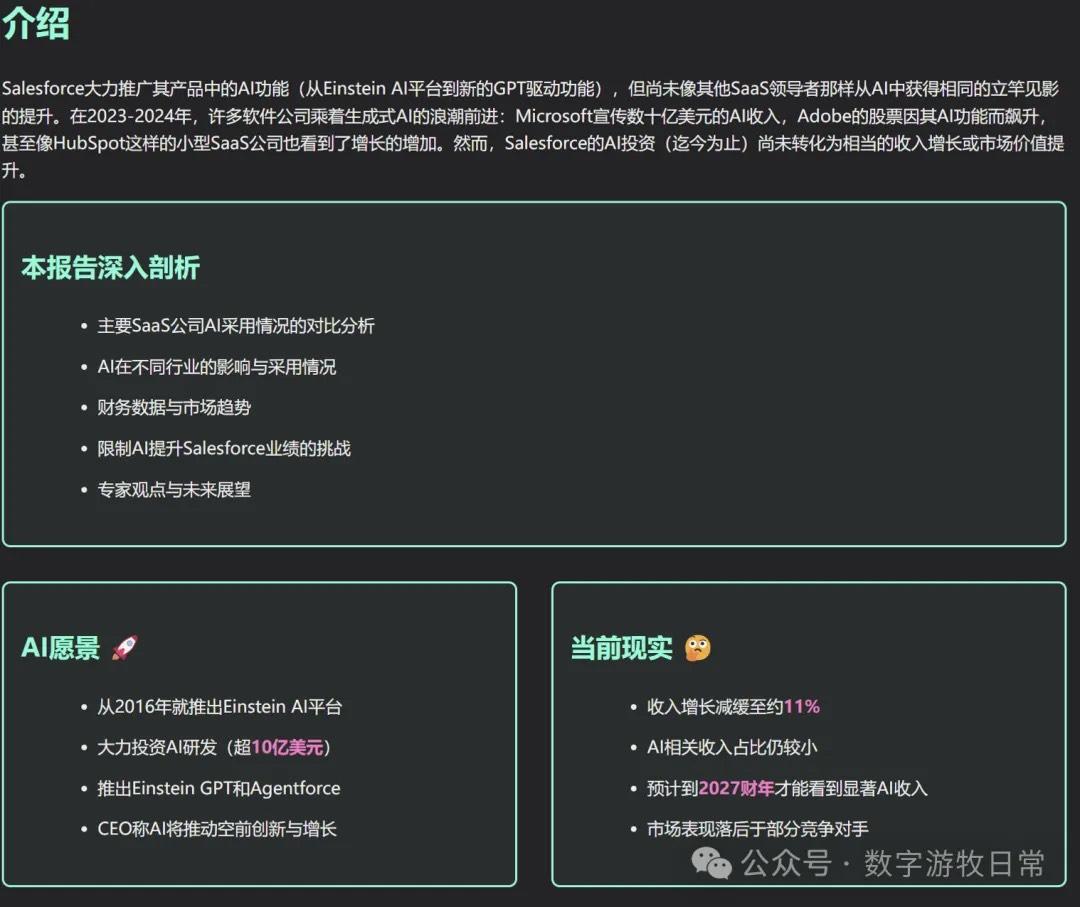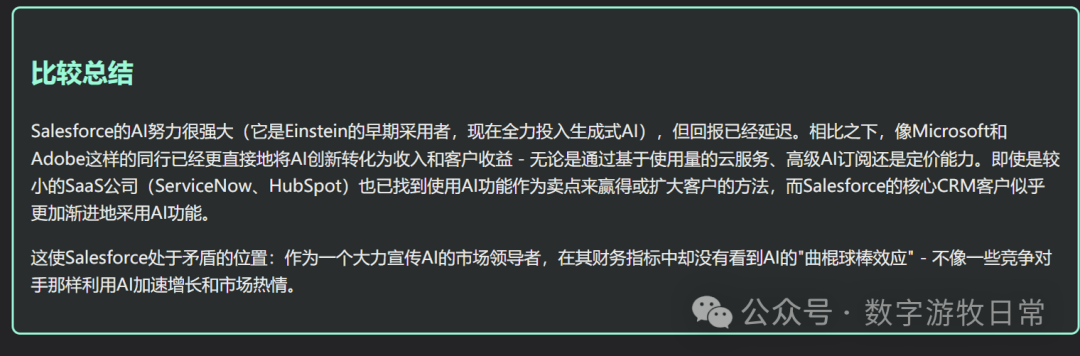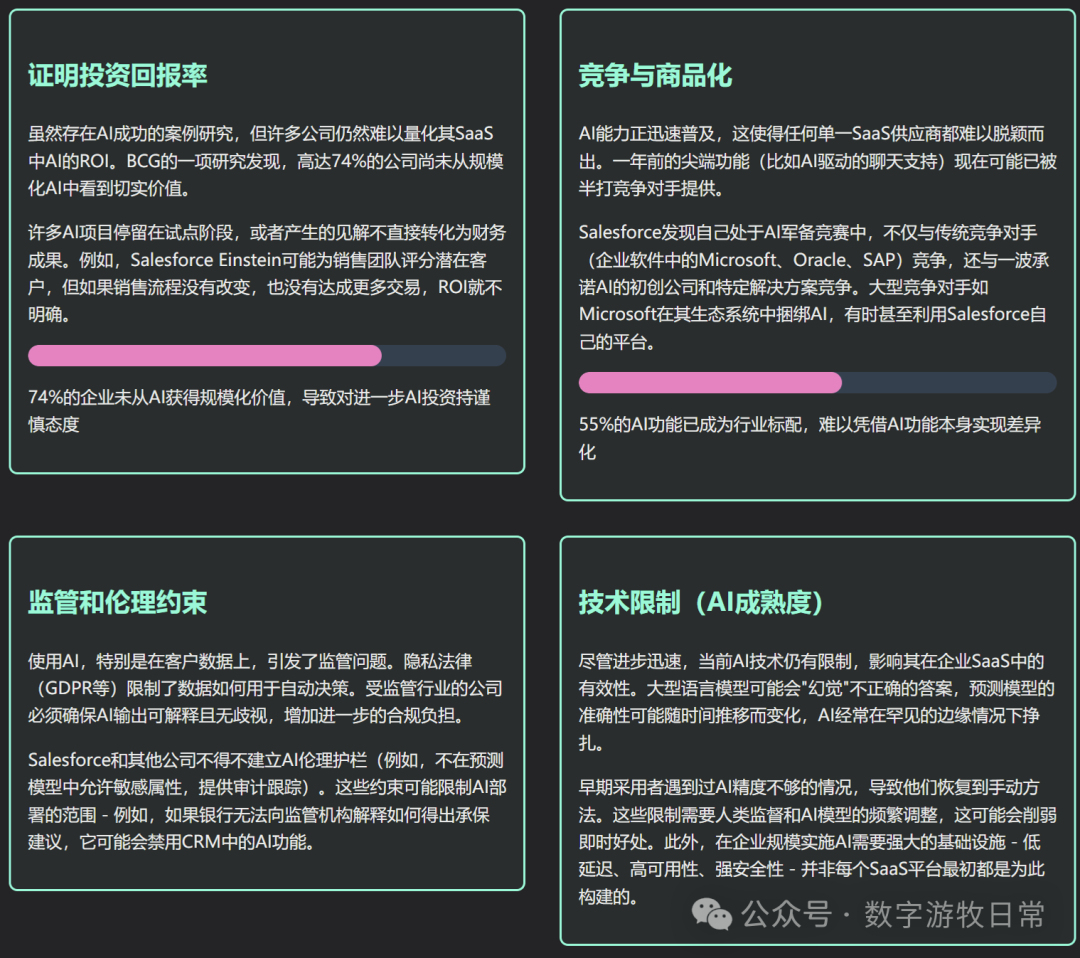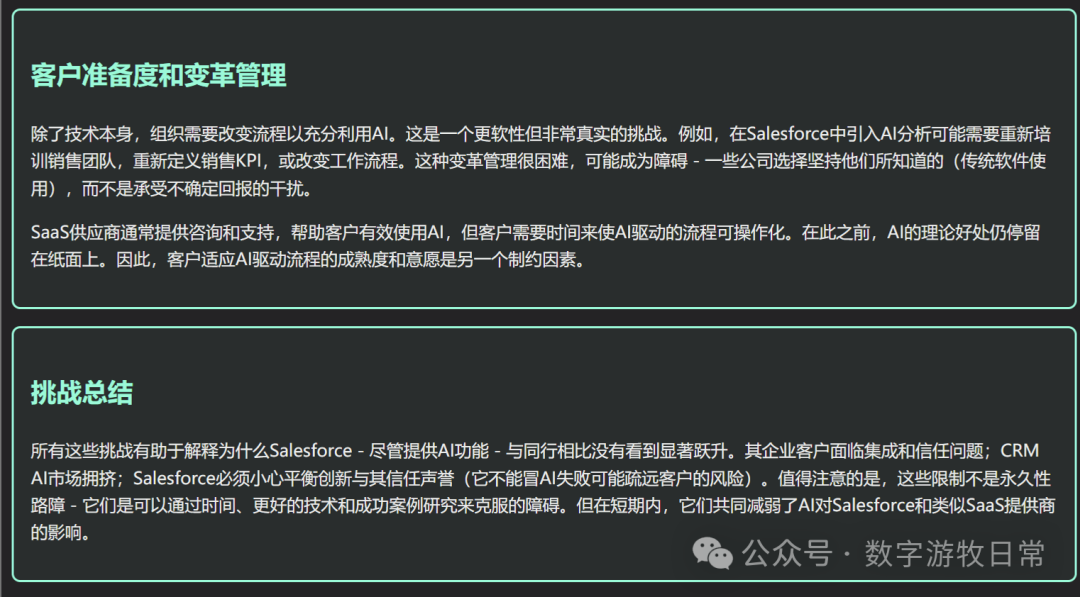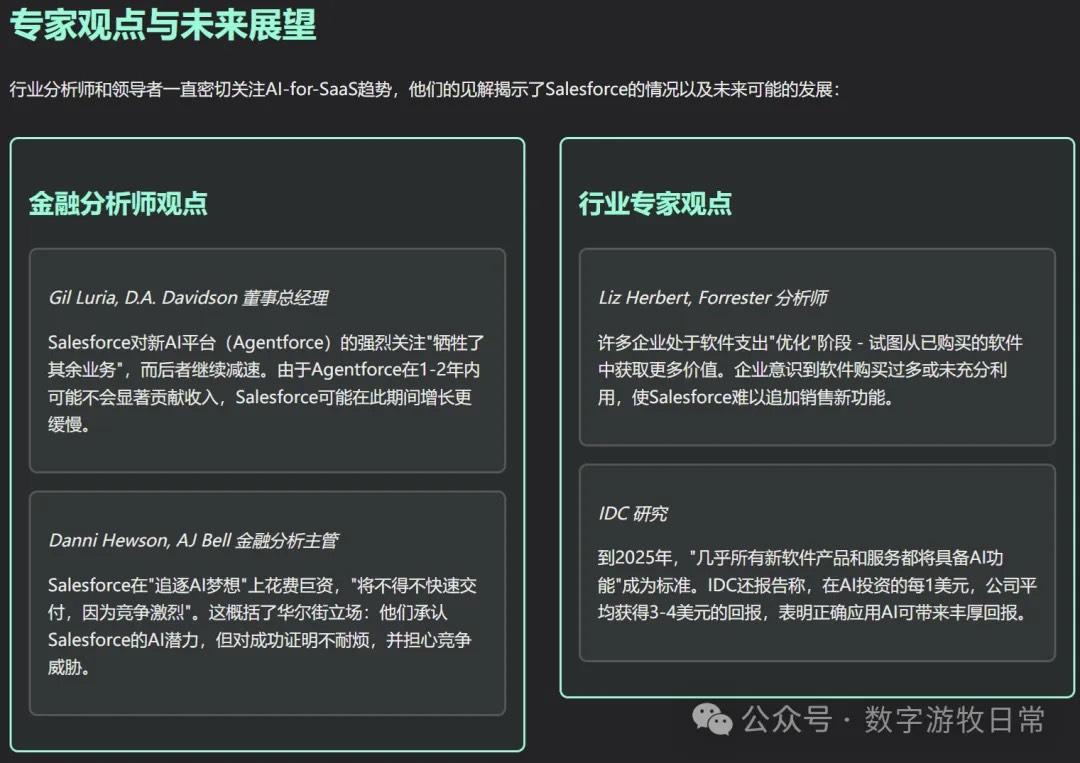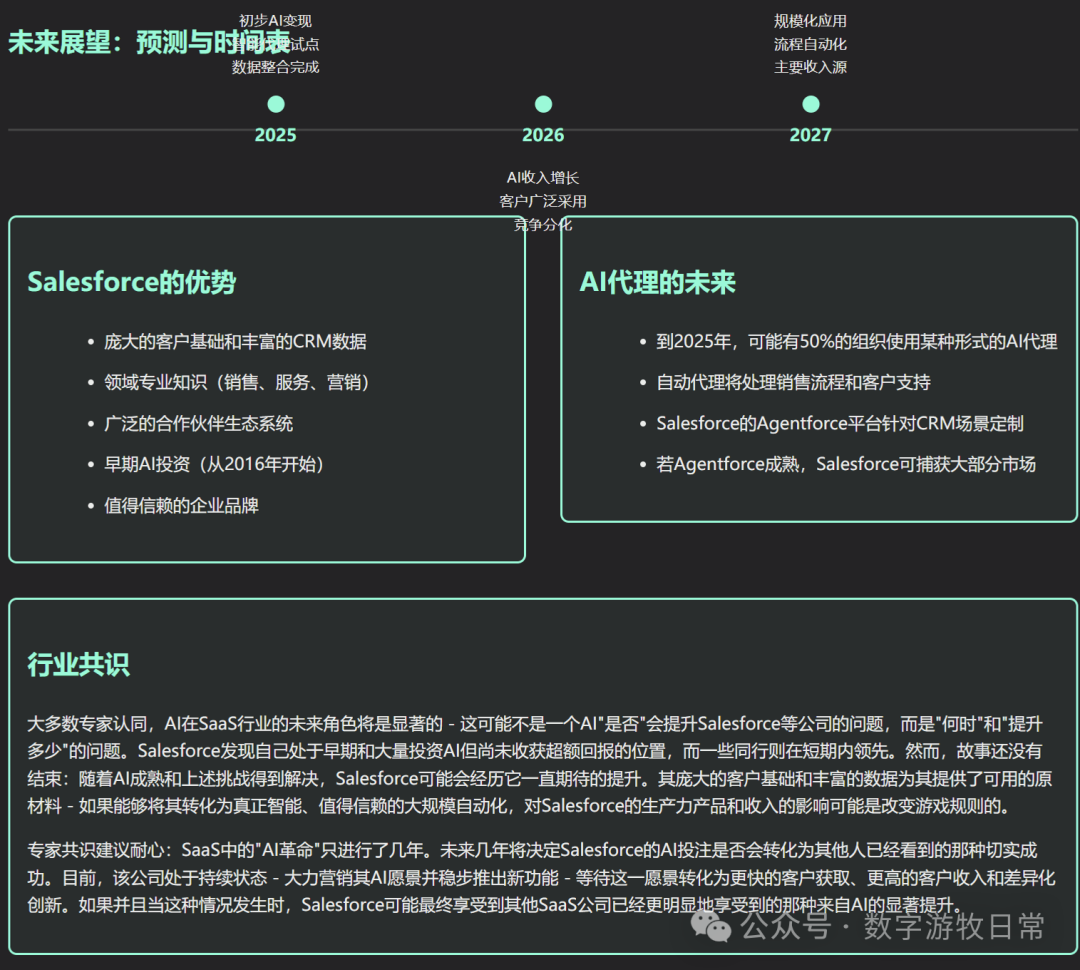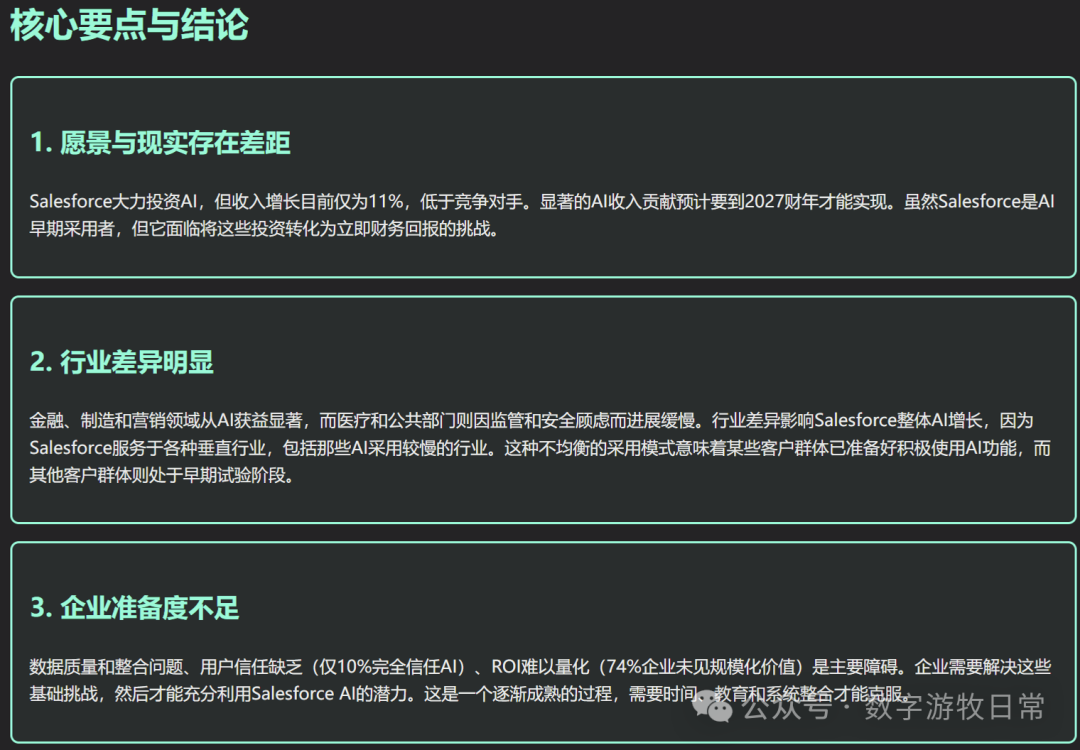
Earnings reports for US tech companies are largely complete. As I review these data and market performances, a question arises: Why hasn't AI significantly improved Salesforce's performance yet?
SaaS is a sector I have been bullish on since the middle of last year as a primary beneficiary of AI. For most of the past period, market expectations and the performance of related companies have actually been reinforcing this logic.
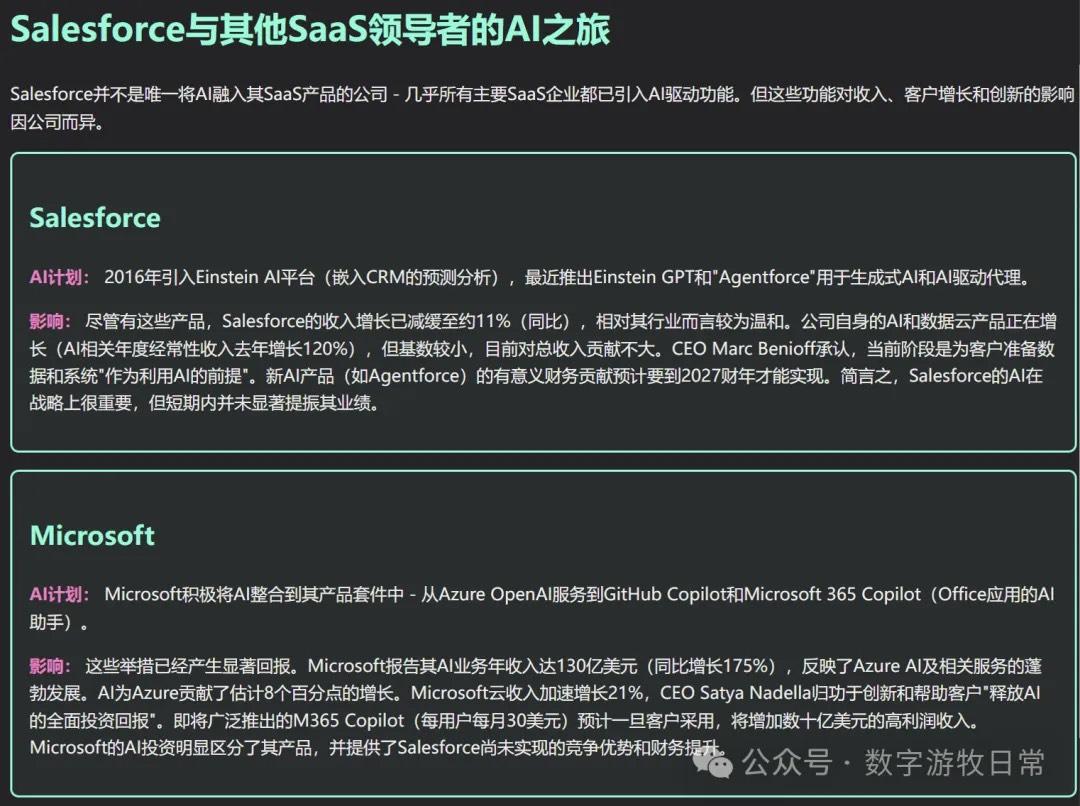
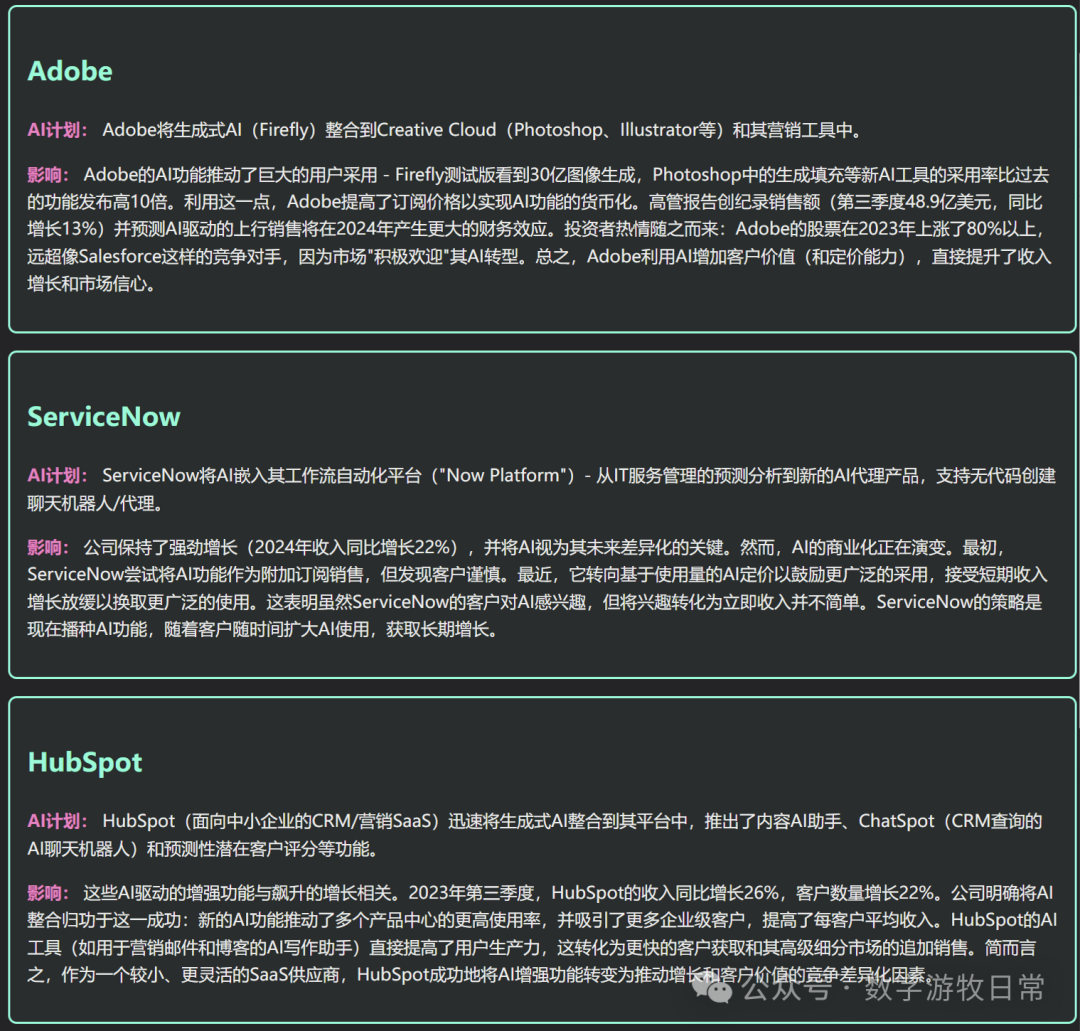
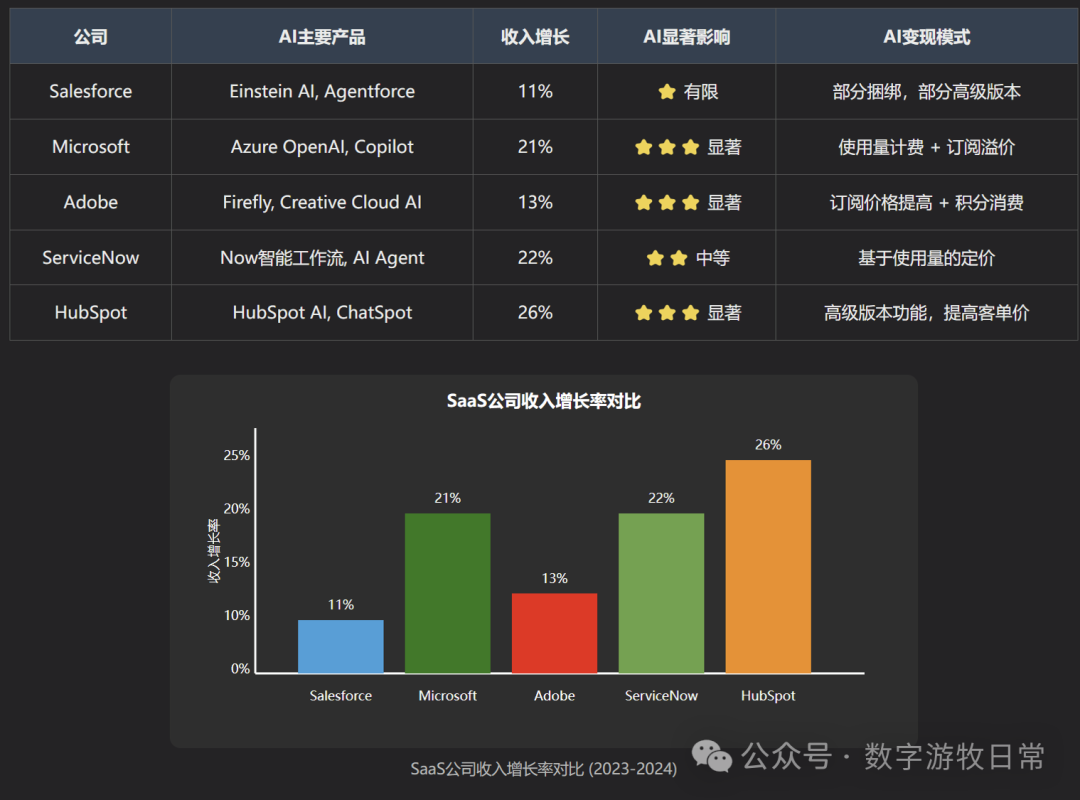
However, it seems that in the most recent quarter, some subtle changes have occurred. While some other SaaS companies continue to exceed market expectations, Salesforce—as one of the first to propose the Agent concept and possessing the "hard" use case of CRM—has not seen its AgentForce product bring a significant boost to revenue.
Where is the problem?
Here are my answers (thanks to AI, I can focus more and more on the opinions themselves):
There is an interesting point in the AI era: it seems that fields with straightforward logic that are easy to penetrate quickly are actually harder to monetize. For instance, CRM might be "too easy," giving customers more choices or even leading to internalizing the tools.
What influences a specific company's AI strategy is neither the supplier's capability nor the business department's ability, but rather the business acumen of the CTO/CIO or the Chief Architect (if any). Without extensive experience in the "last mile" of both technical and business implementation, it is easy to lead a company astray. This might partly explain why AgentForce had a high user volume at launch but didn't reflect in revenue: for an enterprise, the technology stack, core personnel capabilities, and business environment suitable for "localized deployment" of models are far more important factors than the "physical local deployment" of the model itself.
Since the emergence of large models, we have seen an increasing illusion of "I can do it too." We are seeing the "truth under the iceberg" where many enterprises may be facing more "low-level competition" rather than "high-level cooperation." To put it another way, if it doesn't bring about a disruptive restructuring of enterprise architecture, how can it live up to the prestige of an "Industrial Revolution"?
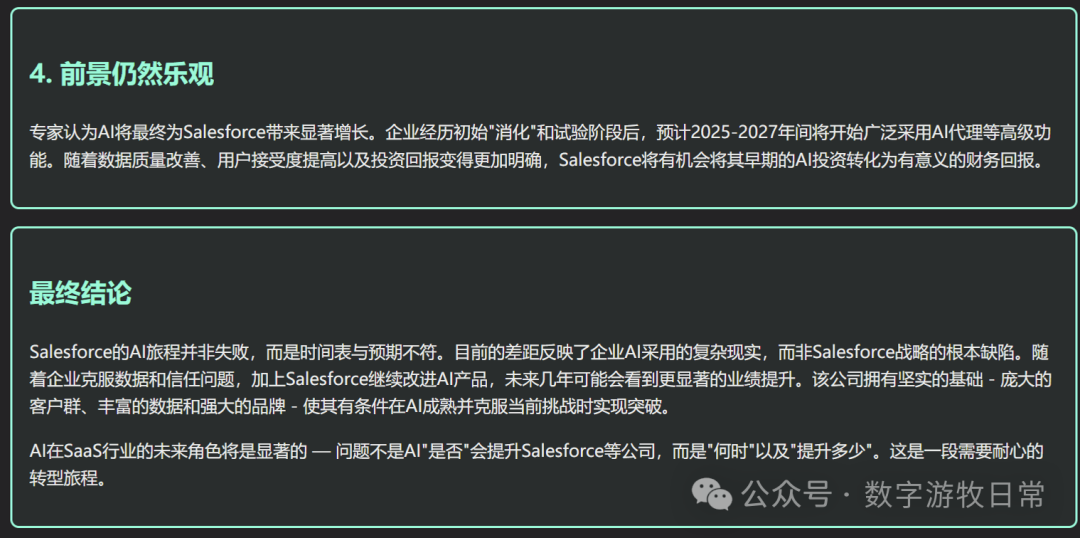
Despite these negative considerations, I remain firmly optimistic about B2B SaaS and its potential to bring massive change starting from a "core pain point." In the AI era, this "core pain point" is unlikely to occur in the processes we are already familiar with, but rather in the new problems being created. I have only seen three such new problems in the past two years: Data, Security, and Human-Machine Collaboration.
The first two, in my concept, already have established paths and solutions—just persist. The third is what I am constantly experimenting with.
It’s still the same view: we think it looks like Manus, but it very likely doesn't at all.
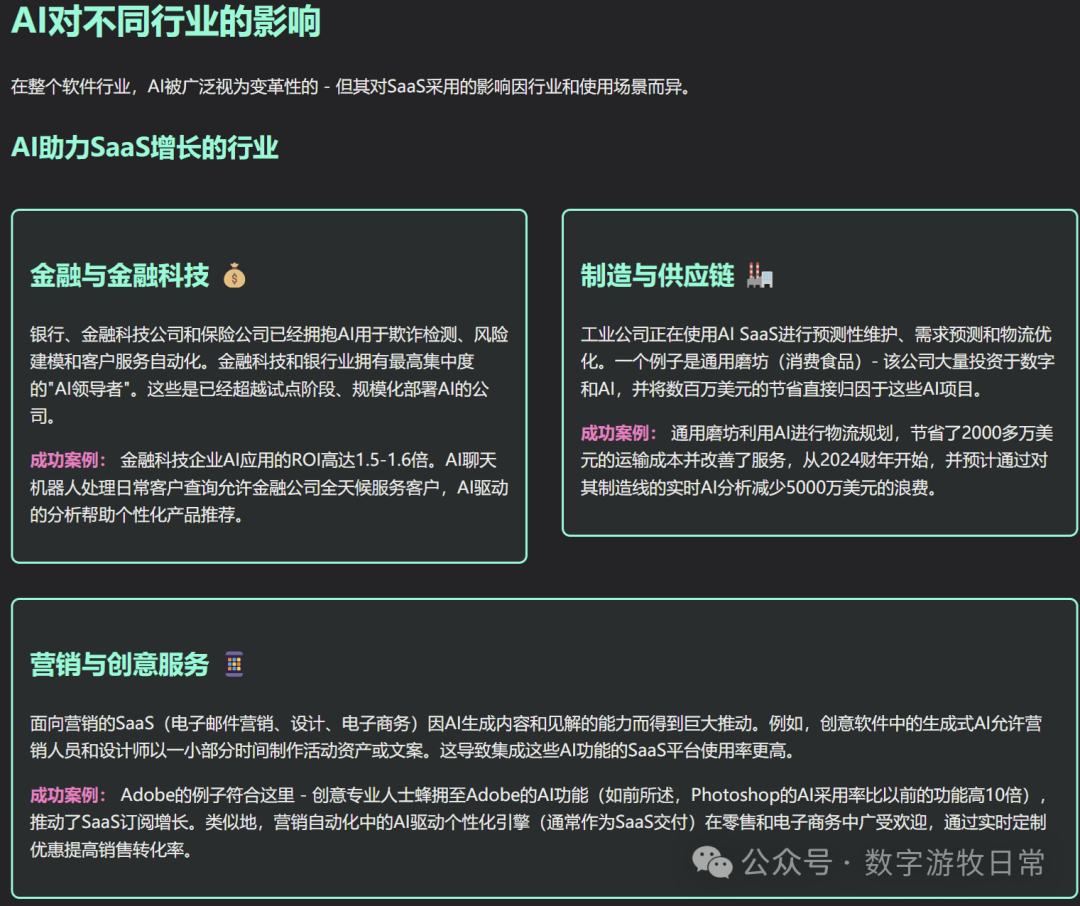
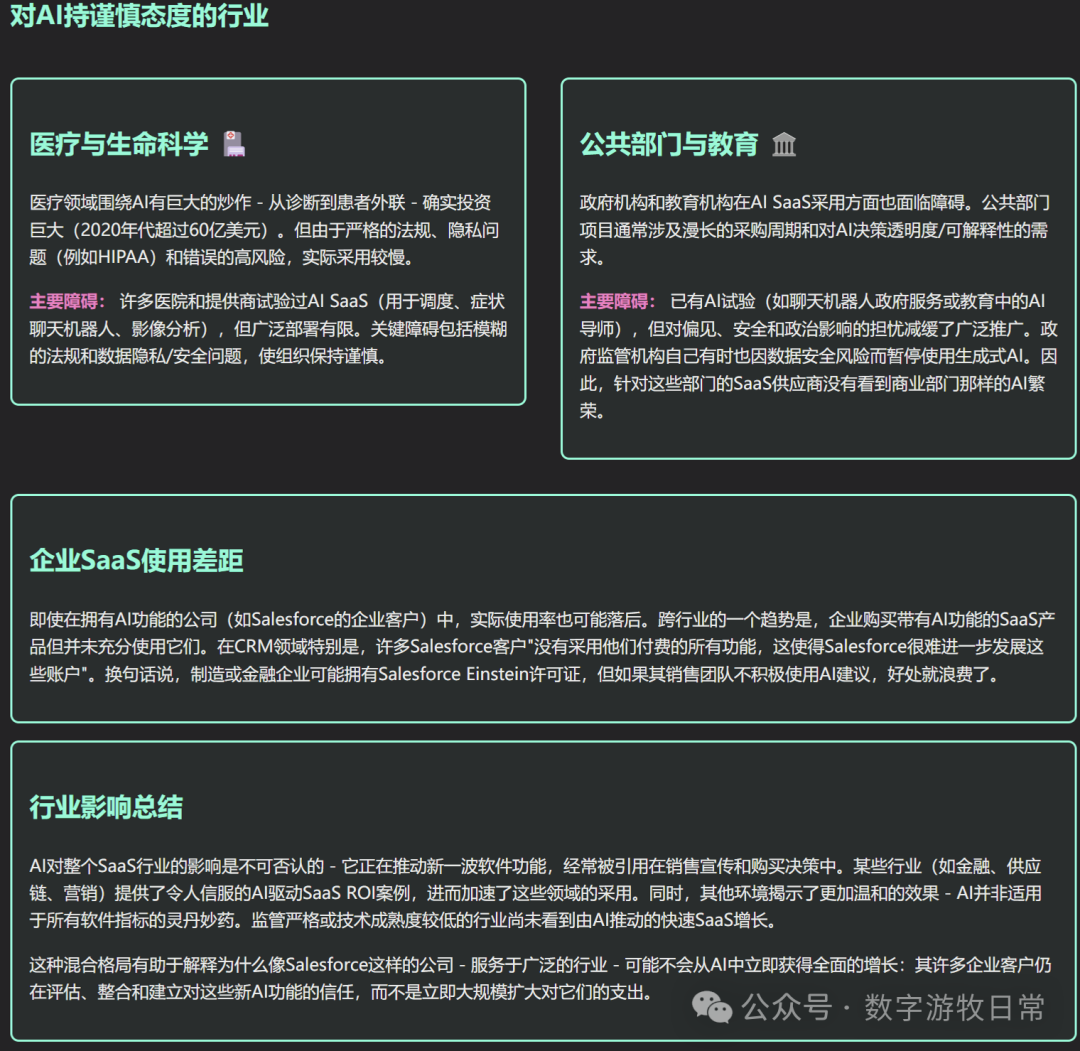
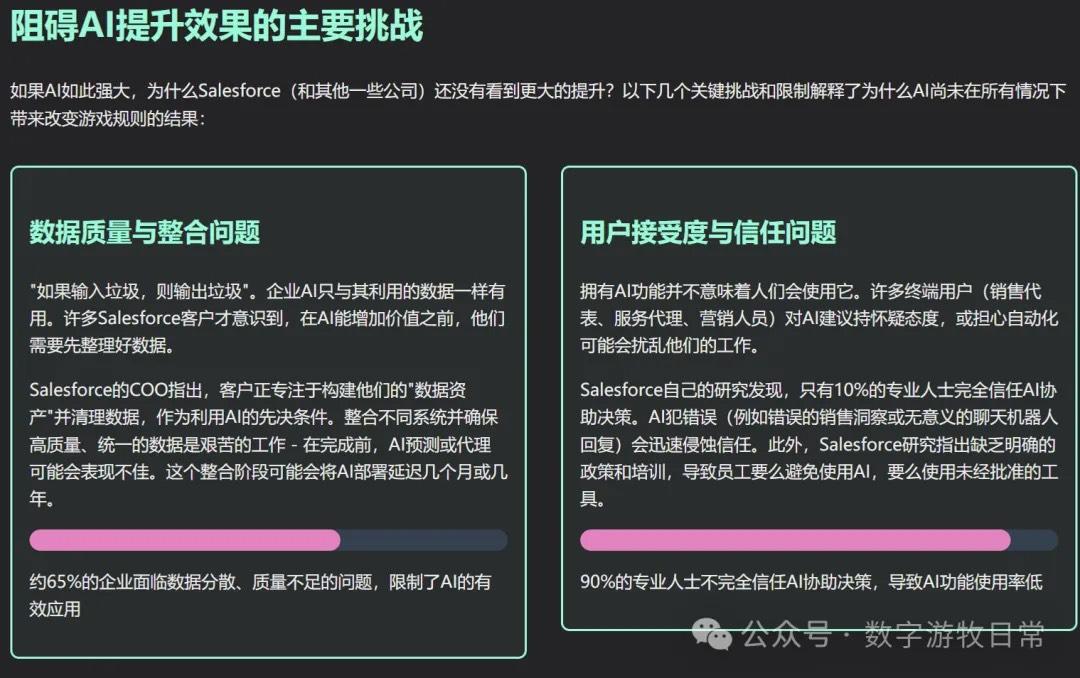
Attached is the model's "deep research" on the above questions. I have already intervened in this process and even added some of my own evaluations, but it still hasn't reached the final form I desire.
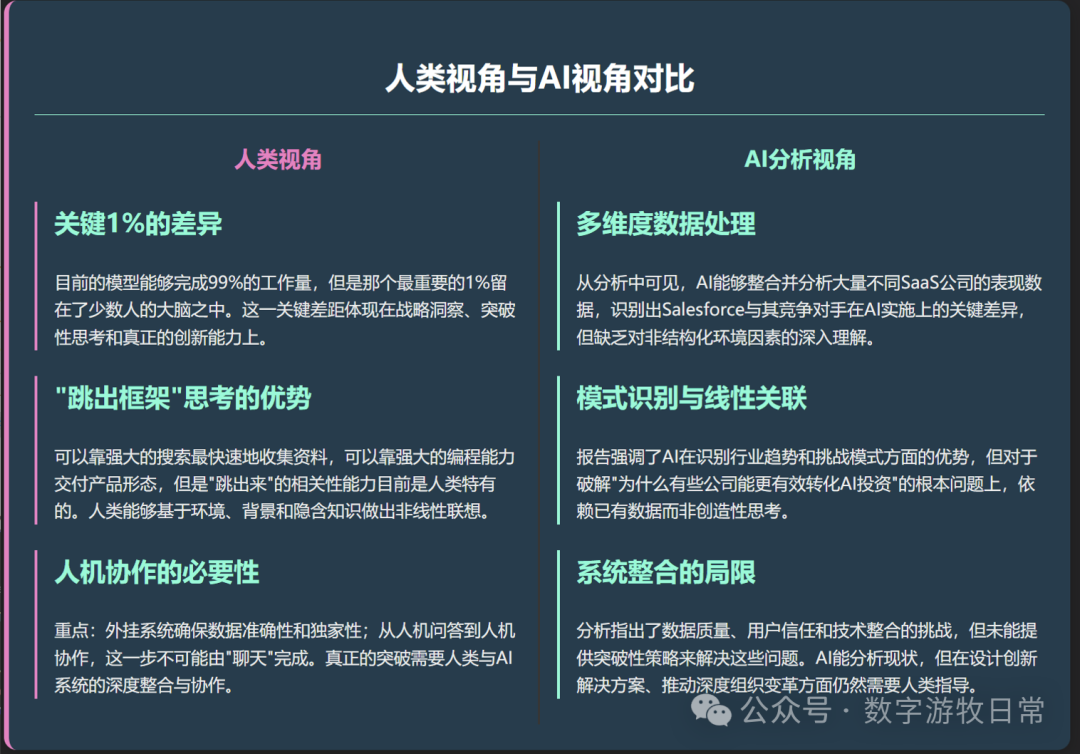
This is a summary built upon a very comprehensive deep report. However, there are still several issues:
I can produce results in a form that I would score above 80 and present them on my own page, but I have not yet found a better way to restore that 80% experience for the reader.
If I were to intervene more, some detailed data in the report would be more effective (not just accurate, but effective in terms of timeliness, comparative dimensions, etc.), but this would mean several times more manual workload.
Currently, my perspective is my perspective, and the AI's perspective is the AI's perspective. There may be no right or wrong, but they are just different.