After a week of intensive experience and exchange activities, my understanding of Apple Vision Pro has deepened. Here, I will discuss my basic views on the product and the points of significant divergence in discussions over the past week.
Experience Section:
Stunning Immersive 3D Experience: For various reasons, many people cannot experience the sense of presence in the "Adventure" series on Apple TV+, which far exceeds IMAX. However, a completely uncompromising and unprecedented "personal cinema" has emerged. Going to a movie theater is a ritual; wearing Vision Pro to watch a movie is a ritual that is highly accessible. For me, this feature alone is worth over 10,000 RMB.
A Fully Customizable 3D Workspace: To the right, a live news broadcast; to the left, a standby Perplexity.ai; slightly above, messages from colleagues or partners; looking down, browsing emails; and in front, the main page for typing, development, or even photo editing. Yes, multiple devices and physical screens can achieve this—I have already done so—but what is the total value of those devices? How much trouble and environmental impact do the space they occupy and the messy cables cause? Moreover, in this newly created 3D space, image quality even exceeds physical devices. For me, this feature is worth over 20,000 RMB, bringing less hesitation and more freedom.
Spatial Video: The sense of presence and nostalgia. The internet is already full of demo videos. Although this isn't my personal pain point, I know it is a core need for many, and it will stimulate many 3D algorithm applications. For many, this feature is priceless.
3D Interaction: Whether it's dismantling an F1 car, appreciating a work of art from 360 degrees, or experiencing a scenic spot or city as if you were there. This interaction stems from spatial expansion. Although there aren't many applications yet, I know many developers are ready and waiting. For me, this is worth 5,000 RMB, and it will be worth more in the future.
Eye Tracking and Gesture Operation: It's not just me; every user, after precise calibration and a period of adaptation, can complete keyboard input through eye tracking at an acceptable speed. This is surely the feature Apple spent the most time tuning, as it's a process of hardware, algorithms, interaction logic, and repeated refinement. For me, it's hard to put a price on this, but Apple deserves the utmost respect.
Gaming: Under current computing power, the gaming experience without a controller isn't great. However, this isn't a problem with the device; it likely means the control logic for game development needs to change. Vision Pro is absolutely the best gaming device currently; it's just a case of hardware leading software.
Others: Ultra-high resolution, 3D immersion, and a new interaction logic. Many feel there aren't enough applications; I believe our experience is still too shallow.
Discussion Points:
The Barrier to Entry: When I first used Vision Pro for about half an hour, I realized it has a learning curve: 1) You need time to adapt the device to yourself, including lens shape and interpupillary distance. It's not particularly friendly to nearsighted users, requiring custom Zeiss lenses for the best effect. 2) A new medium requires a new set of interaction logics. Every first-time user needs time to adapt. This means a brief ten-minute trial will likely lead to a negative review. Deep experience for over half an hour is necessary to truly feel the new paradigm.
The App Ecosystem: Even a brief trial can be shocking due to the unprecedented 3D experience. But two questions follow: Good 3D effects are expected, but will a lack of apps turn this high-priced "toy" into an expensive dust-collector after the initial hype? In recent years, streaming competition has been fierce (Netflix, Disney+, etc.), with platforms investing heavily in exclusive content. In a content-is-king landscape, Apple TV+ and Disney+ provide content that exceeds IMAX; others must follow. More content brings more stickiness, increasing device demand. We've already seen YouTube's 180-degree turn from not supporting VisionOS to developing a dedicated app. Meta is adding spatial video support, and Samsung, Google, and Qualcomm are collaborating on new MR devices.
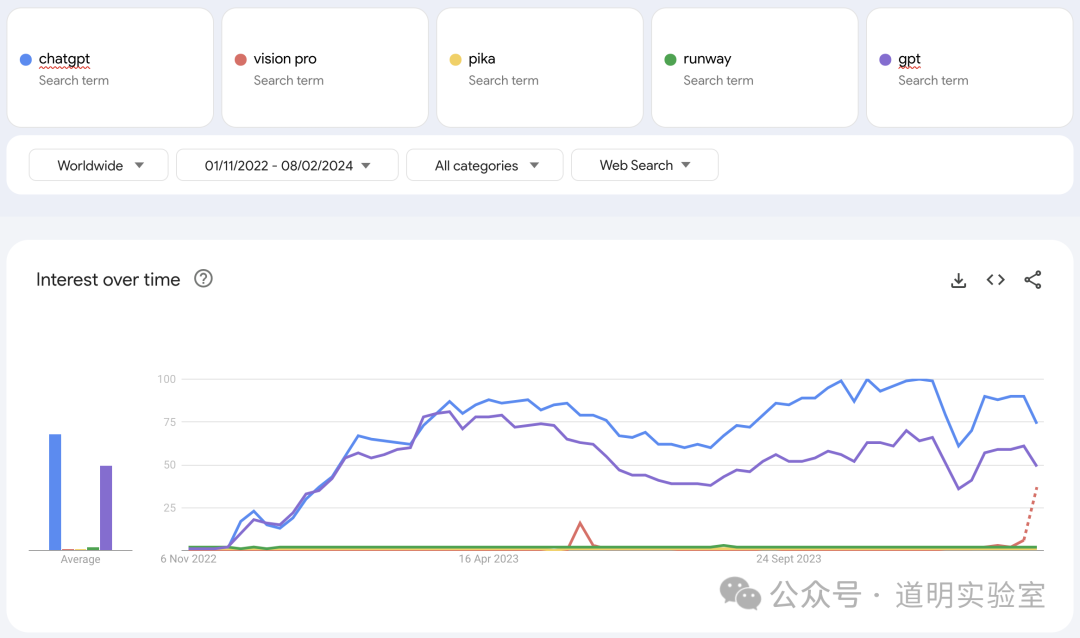
Back to the app question: ChatGPT's popularity was driven by early adopters exploring imaginative use cases, creating a positive cycle of capital influx, accelerated R&D, and rapid updates.
In the past year, though many AI models emerged, only Vision Pro matched or exceeded ChatGPT's launch-week buzz. In the new 3D track, direction certainty, monetization methods, and investment visibility exceed those of GPT. How could developers miss this opportunity?
Productivity and Utility: Beyond 3D, it is a productivity tool. ARKit lowers development barriers, allowing one to transform their workspace on the fly. It will be an excellent educational device—confirmed by the excitement in the eyes of many mothers. Even if used only two to three times a week for immersive cinema, it will become a necessity. Engineering, medical, and digital twin scenarios are now truly possible.
Price and Weight: I don't expect a low-price version within two to three years, as Apple prioritizes experience over price reduction. However, much like the early days of smartphones, cheaper alternatives will help others achieve a sense of balance. While there is room for weight reduction, optimization and human adaptation will coexist until display technologies like holography reach maturity. People are willing to sacrifice some physical comfort for better experiences—examples abound in headphones, cameras, and phones. Quantifiable physical parameters are often compromised for unquantifiable spiritual enjoyment.
Conclusion: Historically, every new technology brings both sensation and controversy. This was true for mobile phones and AI like AlphaGO or ChatGPT. Yet, humanity continues to stride forward. The allure of expanding space and possibility always overcomes the voice of doubt. Though skepticism is often correct and reflective films resonate, what happens next? Humanity moves on.