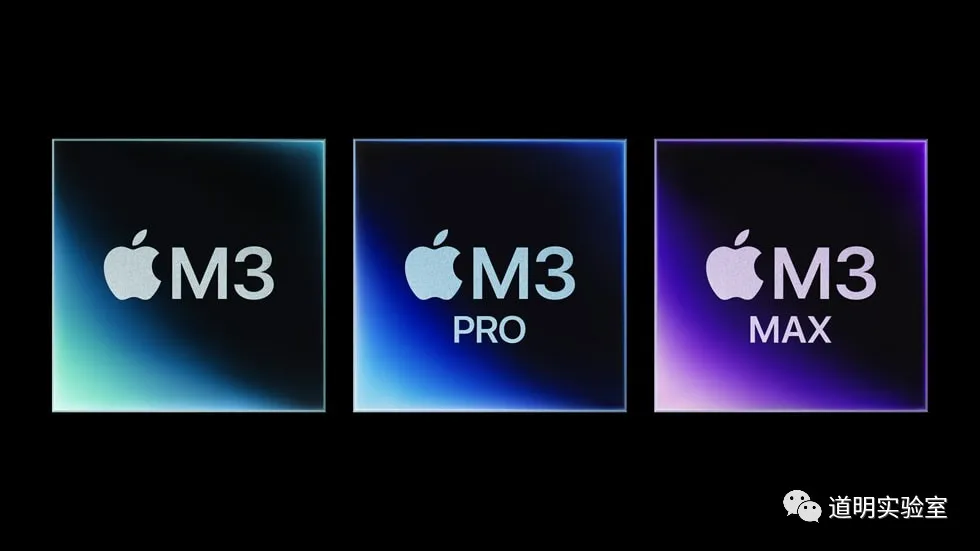
While watching the live stream, I am writing a personal reflection as briefly as possible, attempting to simply organize my thoughts from over a period of time.
If we set aside all technical details and figures, including the 3nm process, the MacBook remains, without a doubt, the only viable option for an "AI Laptop" in my eyes.
Volume, weight, heat dissipation, noise, performance. This combination stems from a gamble that began at least five years ago; losing meant completely losing the laptop product line, along with all professional users, and suffering a "rapidly plummeting" ecosystem experience.
With AI being the sole theme in the tech field today and "in-house chips" becoming the hottest hardware topic, Apple Silicon (M1, M2, M3) has reached its third generation. My respect for this arduous path far outweighs anything else.
AI needs a medium, a suitable set of hardware. Large models will always be developed by someone, but preparing a suitable vessel for the implementation of large models in advance is more significant than the models themselves. This is what Apple excels at—not necessarily being the first to see it, but once they do, having the courage and execution to become a leader.
Apple remains the company with the strongest innovation capabilities. At every critical juncture, you will find that they have already occupied the best vantage point for a bird's-eye view. Fortunately, this path resonated with me from the beginning and inspired me to imagine more and more seemingly impossible combinations.
Returning to the technical level, Apple Silicon is not just a chip, but a hardware architecture, operating system adaptation, and a set of user-friendly development kits that fully utilize hardware performance (comparable to Nvidia's CUDA; Apple's version is Metal, though they aren't exact equivalents as their focuses differ). Abandoning Intel's x86 meant restructuring all kernels without significantly impacting user experience: making the new bottle look like the old one, but filled with new wine. The opening experience and taste satisfy conservatives while providing new content to attract early adopters.
Qualcomm finally produced a decent PC chip: the X-Elite. However, it requires seamless cooperation between the chipmaker, operating system, and PC manufacturer to deliver a perfect experience. Therefore, the opportunity might more likely belong to Nvidia's SoC.
We thought that after the emergence of AI, the best companies would be either algorithm companies or chip companies. In fact, after the emergence of AI, the best remains the all-around company that can build from the lowest level to the final product.
More than half a year ago, many people asked me if the largest computing clusters were the most important. I knew the answer, but I couldn't respond.
In fact, the computing power we need most is the computing power that everyone can touch. Predictable technological progress tells us that in perhaps three or five years, the things we currently consider the most massive will become "toys" we carry with us.